
3D Printer Platform PEO PET
4.5Editor score
Dual texture design
High temperature resistance
Easy model removal
This guide compares the top 10 build plates for 3D printers, evaluating adhesion, durability, and compatibility for Bambu Lab, Creality, and other popular
Finding the right build plate for your 3D printer is crucial for successful prints. A good surface ensures strong adhesion, easy removal, and consistent results across different materials like PLA and PETG. It protects your printer bed and extends the life of your machine.
We compared ten leading build plates based on user feedback, material quality, and compatibility. Our analysis covers options for Bambu Lab, Creality, and other mainstream printers. We looked at texture, flexibility, and thermal properties to rank the best choices for various needs.
Each pick highlights specific strengths and ideal use cases for your setup. You will find details on installation, maintenance, and performance with different filaments. Please note that product availability and pricing may change over time, so verify before purchasing.
4.5Editor score

4.4Editor score

4.2Editor score
The following table provides a quick side-by-side look at all ten products reviewed in this guide. It highlights key specifications and compatibility to help you narrow down your choices based on your printer model and specific printing requirements.





The BIQU CryoGrip Pro Glacier build plate is a top choice for Bambu Lab users seeking reliable performance. It holds a solid rating based on user feedback and offers a unique surface texture that minimizes the need for adhesives. Its design addresses common pain points like heat transfer to hands during removal.
We may earn a commission when you buy through this link, at no additional cost to you.
This plate features a 7-layer cobalt oxide coating that ensures strong adsorption and limits stress warping. The hollow out handle design allows you to touch the plate safely even when the hot bed reaches 100 degrees Celsius. This feature alone makes it stand out for high-speed printing workflows.
While it excels with ABS and PA, users note that PLA adhesion is slightly less than the Frostbite variant. Additionally, you may need to adjust settings on specific models like the P2S to avoid detection errors. These are minor trade-offs for the robust build quality and ease of use.
If you own a Bambu Lab P1S, X1C, or similar model, this plate is a highly recommended upgrade. It simplifies the printing process by reducing failure rates and making removal safer. For those prioritizing consistent results and durability, this is a strong investment.
The unique handle design prevents burns by insulating the grip area from the heated bed temperature.
From standard PLA to engineering materials like ABS, this plate handles a wide range of extrusion temperatures.
We may earn a commission when you buy through this link, at no additional cost to you.
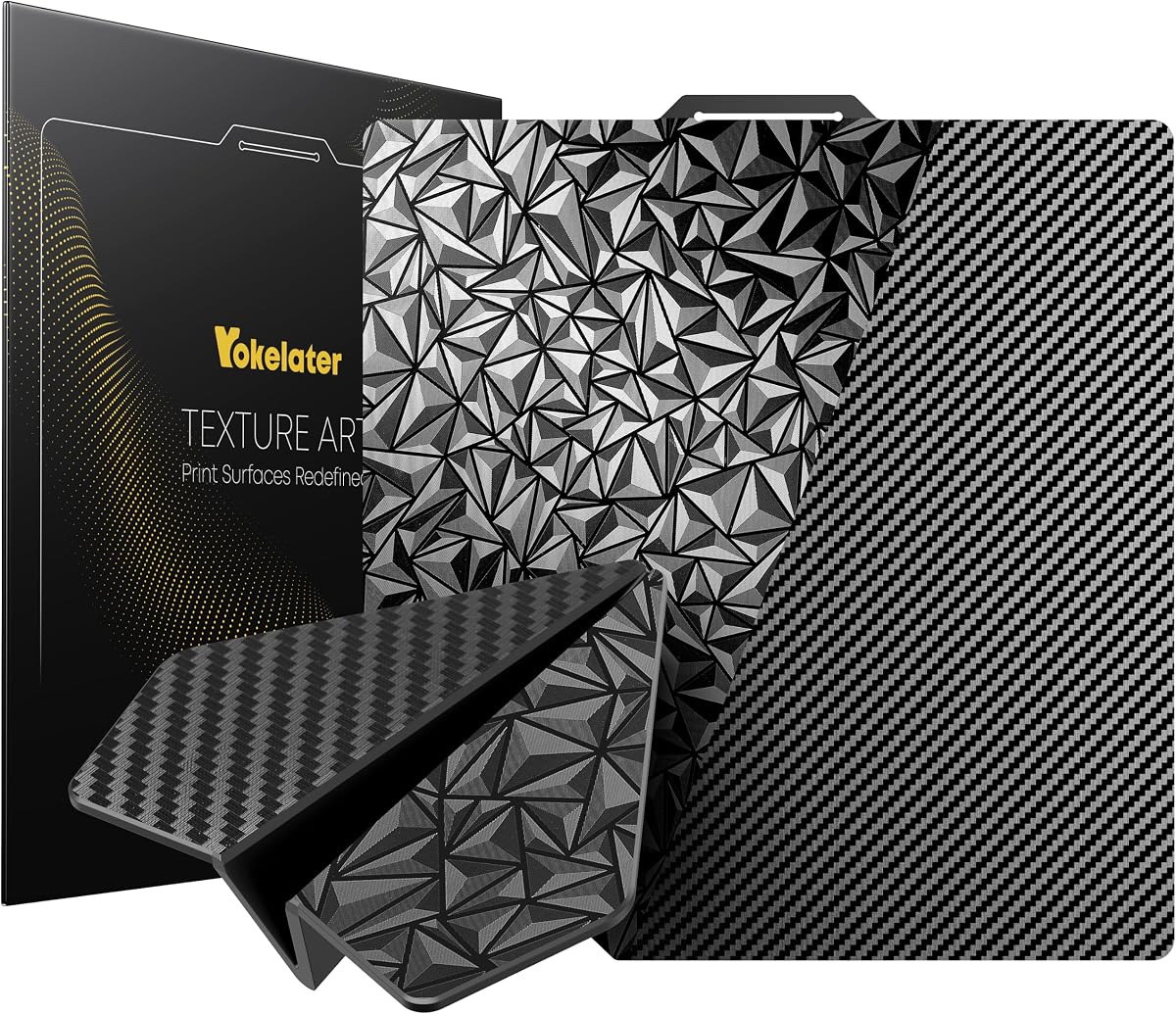
This PEO PET build plate offers an excellent balance of cost and performance for budget-conscious makers. It combines diamond and carbon fiber patterns to give your prints a professional look without extra post-processing. The price point makes it accessible for users upgrading multiple printers.
We may earn a commission when you buy through this link, at no additional cost to you.
The high-strength spring steel ensures flatness and elasticity over time, resisting deformation even after repeated bending. Users report that models release easily once the plate cools. The surface requires wiping with a damp tissue to remove oils, which is a standard practice for maintaining adhesion.
You must pay attention to bed temperatures for different filaments. For example, PLA works best between 60 and 65 degrees. Ignoring these settings can lead to adhesion issues. However, following the guidelines yields smooth results with a matte finish.
For those who want a reliable, low-cost upgrade for their Bambu Lab printer, this plate is a fantastic option. It supports a wide range of filaments and provides two visual finishes in one unit. It is a practical choice for hobbyists and small businesses alike.
The dual texture design allows you to choose between a smooth matte look or a carbon fiber look for your models.
Regular cleaning with alcohol or water keeps the surface effective and prevents residue buildup from previous prints.
We may earn a commission when you buy through this link, at no additional cost to you.
This dual-sided PEI build plate is designed for users who want versatility in their print surfaces. One side offers a textured finish for strong adhesion, while the smooth side provides a polished bottom finish. It is highly rated for its ability to handle high-temperature materials.
We may earn a commission when you buy through this link, at no additional cost to you.
The textured side is coated with genuine PEI powder, which is heat resistant up to 300 degrees Celsius. This allows you to print materials like ABS and Nylon without fear of warping or damage to the plate. The smooth side is ideal for functional parts where surface finish matters.
You should note that the smooth side often requires a glue stick to prevent prints from detaching prematurely. Additionally, you must level the bed again if you switch sides. These steps are necessary to ensure consistent quality but add a small amount of effort to your workflow.
If you need a plate that can handle both aesthetic and engineering prints, this is a solid choice. It fits seamlessly into the Bambu Lab ecosystem and offers robust performance. For those willing to manage the leveling process, the results are often worth the extra care.
Swap between textured and smooth sides to match the needs of your specific project or material.
The PEI coating is engineered to withstand high temperatures, making it suitable for advanced engineering filaments.
We may earn a commission when you buy through this link, at no additional cost to you.
This Creality build surface is a flexible and magnetic option that works with a wide variety of FDM printers. It is designed to make model removal significantly easier by allowing you to bend the flexible top layer. This is especially useful for models that stick too firmly to glass beds.
We may earn a commission when you buy through this link, at no additional cost to you.
The product includes an upper magnetic surface and a lower magnetic adhesive base. You place the lower part on your bed and attach the top magnetic sticker. It is important to ensure the magnetic direction is correct before sticking it down to avoid separation issues during printing.
While it offers great flexibility, it is not intended for extremely high-temperature environments. The adhesive base works best on standard heated beds. If you frequently print with high-temperature filaments, you may find the magnetic strength weakens over time.
For general purpose printing, this build surface is a convenient upgrade that reduces manual scraping. It fits many Creality models and other generic printers. If you struggle with removing prints without damaging them, this magnetic sheet provides a practical solution.
The magnetic design allows this surface to be used with almost any printer that supports a magnetic build surface.
Simply bend the flexible sheet to release your print without needing tools or excessive force.
We may earn a commission when you buy through this link, at no additional cost to you.
This dual texture build plate combines different surfaces to meet varied printing needs. One side features PET and PEO patterns, while the other utilizes PEI. This allows you to print with different materials without changing the entire plate. It is designed to fit the Bambu Lab series perfectly.
We may earn a commission when you buy through this link, at no additional cost to you.
The surface is resistant to scratches and chemical wear, which helps maintain its quality over many prints. The spring steel core provides the flexibility needed to pop prints off easily once cooled. This design reduces the risk of damaging both the print and the bed surface.
You must adjust your bed temperature based on the side you are using. PEI supports a wider range of materials and higher temperatures than PEO. Knowing which side to use for PLA versus ABS is key to getting the best adhesion and finish for your project.
For users who switch between different filament types often, this plate offers great versatility. It saves space and effort compared to owning multiple plates. The durability and flexibility make it a strong contender for regular Bambu Lab users.
Select the right texture for your filament to ensure optimal adhesion and removal.
Clean regularly to prevent residue buildup that could affect adhesion on either side of the plate.
We may earn a commission when you buy through this link, at no additional cost to you.
This build plate features a vibrant sky-blue adhesive that adds a visual element to your printing setup. While the color does not transfer to the print, it enhances the look of the printer bed. The stainless steel construction ensures durability and resistance to heat.
We may earn a commission when you buy through this link, at no additional cost to you.
It supports a wide range of consumables from PLA to ABS. The plate is compatible with most Bambu Lab models and includes an AR code for automatic recognition. Users report that the adhesive is strong enough to prevent warping during printing.
You may need to turn off build plate detection on certain models like P2S to avoid errors. This is a simple setting change that resolves compatibility issues. The plate cleans easily with water or alcohol, which is convenient for frequent use.
If you value both function and aesthetics, this plate is a great choice for your Bambu Lab printer. It offers reliable adhesion and is easy to maintain. The unique look can also help you identify your machine quickly in a workspace.
The vibrant sky-blue hue creates a dynamic look for your printer bed.
The textured surface ensures prints stay secure during the process and release easily after cooling.
We may earn a commission when you buy through this link, at no additional cost to you.
This PEI plate is tailored for Creality Ender series printers, offering a reliable upgrade from stock beds. It features a two-in-one design that includes a hardend steel spring sheet. The strong magnetism ensures the sheet stays in place during printing.
We may earn a commission when you buy through this link, at no additional cost to you.
Installation is straightforward, and removing models is easy by bending the flexible sheet. Users appreciate that no tape or glue is needed to secure prints. The powder-coated finish provides a smooth surface that resists deformation over time.
While it is highly rated, the surface is not immune to scratches from aggressive removal tools. Using a scraper with care is recommended to maintain the plate. Overall, the durability and ease of use make it a favorite among Ender users.
For anyone using an Ender 3 or similar model, this plate is a smart investment. It solves common adhesion problems and makes removal much safer. The high rating reflects its consistent performance in real-world printing scenarios.
The strong magnetism keeps the plate fixed in place without slipping during the print.
The flexible design allows you to pop prints off without needing tools or scraping.
We may earn a commission when you buy through this link, at no additional cost to you.
This PEI sheet is designed to ensure high flatness, which is critical for first-layer adhesion. The spring steel core resists deformation even after repeated bending. It includes positioning holes and handles for precise installation, making it easy to align correctly.
We may earn a commission when you buy through this link, at no additional cost to you.
The magnetic paste remains strong even at high temperatures, ensuring stability during long prints. Users can print with most filaments, from PLA to PC, without worrying about bed failure. The frosted texture provides a balance of adhesion and ease of removal.
Installation requires careful alignment to utilize the positioning holes effectively. Once set, the plate performs reliably. The durable coating means you can use it for months without needing replacement. It is a solid upgrade for the Ender 3 V3 KE.
If you want a reliable bed that simplifies setup, this plate is a strong option. The design features help prevent common alignment issues. Its performance across various materials makes it versatile for different printing projects.
The double handles and positioning holes make installation simple and precise.
The spring steel core provides the flatness necessary for consistent prints.
We may earn a commission when you buy through this link, at no additional cost to you.
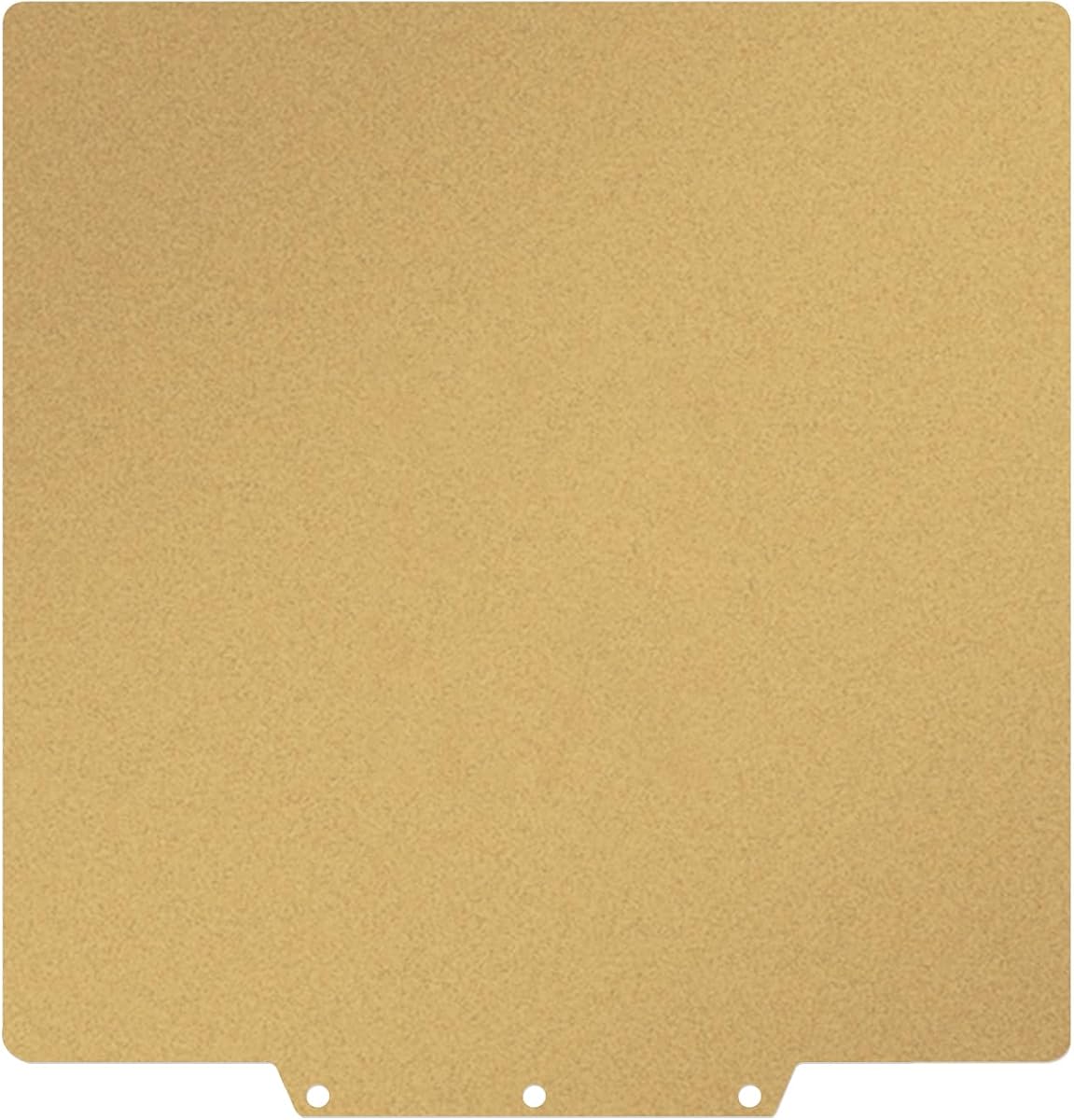
This gold PEI build plate is designed for Adventurer and similar printers. It offers double-sided frosted PEI coating to enhance adhesion and reduce warping. The gold color adds a unique aesthetic to your machine while providing a robust surface.
We may earn a commission when you buy through this link, at no additional cost to you.
The spring steel plate ensures easy removal and durability. You can print a wide range of materials including PLA, PETG, and ABS. The flexibility allows you to bend the sheet to release prints easily without tools.
You should avoid cleaning the plate with strong chemicals to preserve the surface. A soft cloth with mild soap is recommended. The double-sided nature means you can switch sides if one wears out, extending the plate's lifespan.
For those with Adventurer or Neptune printers, this plate offers excellent value. It provides reliable adhesion and a distinct look. The durability and versatility make it a good choice for frequent users.
Use both sides to extend the life of your plate and maintain performance over time.
The gold finish offers a stylish upgrade over standard black or grey plates.
We may earn a commission when you buy through this link, at no additional cost to you.
This BIQU plate is designed for Adventurer and similar 235mm printers. It features a unique 7-layer design that helps realize firm adhesion at lower temperatures. The honeycomb handle insulates heat, allowing you to touch the plate even at high bed temps.
We may earn a commission when you buy through this link, at no additional cost to you.
The self-recovering coating means you can clean it easily to restore performance. Prints release cleanly with just a slight bend. It supports materials like PLA and PETG exceptionally well, reducing the need for glue sticks or sprays.
You must set the bed temperature correctly for the filament you are using. For PLA, a lower setting is recommended. This helps prevent issues like over-adhesion or burning. The design is optimized for ease of use.
For Adventurer owners, this plate is a significant upgrade from the stock bed. It addresses heat and adhesion issues directly. The build quality ensures longevity and makes the printing process more enjoyable.
The handle design keeps the grip area cool to prevent burns during removal.
Use water and soap to clean the surface, which restores its adhesion capabilities quickly.
We may earn a commission when you buy through this link, at no additional cost to you.
Selecting the right build plate requires considering your printer model, printing needs, and budget. This guide breaks down the key factors to help you make an informed decision.
Always verify that the build plate dimensions match your printer's bed size. For example, Bambu Lab printers typically use 257x257mm plates, while Creality Ender models use 235x235mm. Using a plate that is the wrong size can lead to mounting issues and poor performance.
Check the product description for a list of supported printer models. If your printer is not listed, measure your bed carefully to ensure a perfect fit.
The surface material determines how well your prints stick and how easily they come off. PEI and PEO are common materials that offer strong adhesion. Some plates offer a smooth side for polished prints and a textured side for stronger grip.
Choose a texture that matches your needs. If you print many functional parts, a smooth surface is better. If you print complex models, a textured surface may prevent detachment.
Different materials require different temperatures and surface adhesion. PLA is easy to print, while ABS and Nylon require high heat and stable beds. Ensure the build plate is rated for the temperatures your chosen materials need.
Read the product specs to see the maximum temperature rating. A plate that handles up to 300C is more versatile than one rated for 150C.
Consider how easy the plate is to install. Magnetic plates are generally simpler to replace than those requiring adhesive. Some models have positioning holes to help you align the plate correctly.
If you swap plates frequently, look for designs with handles or magnetic bases that allow for quick changes.
A durable coating resists scratches and wear over time. High-quality plates often have multiple layers of protective coating. This ensures the surface remains effective for a long period without needing replacement.
Avoid plates with thin coatings that peel easily. Look for descriptions mentioning resistance to scratches and corrosion.
If you often print with high-temperature materials, a handle design is valuable. Insulated handles allow you to remove prints safely without burning your fingers. This feature is particularly useful for users who need to swap plates during long sessions.
Prioritize plates with dedicated handle designs if safety and speed are important to your workflow.
Build plates vary in price. While expensive plates offer more features like special handles or coatings, budget options can still perform well. Compare the features you need against the price to find the best value.
A slightly higher cost may be worth it for better durability or ease of use. Do not compromise on quality if it affects your print success rate.
Consider how much maintenance the plate requires. Some plates need regular cleaning with alcohol to maintain adhesion. Others are more forgiving and can be wiped with water. This affects your daily workflow and effort.
Look for plates with self-recovering coatings or easy-clean surfaces if you want minimal maintenance.
Before using your build plate for the first time, clean it thoroughly with soap and water or alcohol to remove any manufacturing oils. This ensures that the adhesive properties of the surface work at their full potential. Allow it to dry completely before mounting it on your printer bed.
When printing, ensure your bed is leveled correctly. An unlevel bed can cause poor adhesion or uneven first layers. For plates with different textures, select the side that best matches your filament type. Use the recommended bed temperatures for the surface you are using.
After printing, allow the plate to cool if possible to ease removal. If the plate has a flexible design, gently bend it to pop the print off. Clean the plate after each use to remove any residue. Store it flat to prevent warping or damage to the coating.
Not always. For PLA, you often do not need glue on a textured PEI surface. However, for a smooth PEI side or materials like ABS, a glue stick is recommended to ensure the print sticks properly during the process.
You should clean the plate before every few prints. Wiping it with alcohol or water removes oils and dust that can affect adhesion. Regular maintenance extends the life of the coating and ensures consistent print quality.
No, you should not. The dimensions must match your printer bed exactly. Using a larger plate may not fit the mounting mechanism and could cause alignment issues that ruin your prints or damage the printer.
Smooth PEI gives a glossy bottom finish to your prints but may need glue. Textured PEI provides stronger adhesion for most materials and leaves a matte finish. You can use both sides of double-sided plates for different results.
Common reasons include a dirty surface, incorrect bed temperature, or an unlevel bed. Clean the plate with alcohol, check your nozzle and bed temperatures, and run a bed leveling routine to resolve these issues.
Spring steel plates are designed to be flexible and can withstand bending without deformation. However, excessive bending or scratches from tools can wear down the surface over time. Handle them with care to prolong their lifespan.
A quality magnetic plate will stick firmly to the bed without slipping. If the plate shifts during printing, the magnets may be too weak or the bed is not flat. Check for gaps or unevenness in the installation.
Higher-rated plates often offer better durability and adhesion. If you print frequently or with hard-to-print materials, the investment is often worth it. For casual printing, budget options may suffice.
Choosing the right build plate can significantly improve your 3D printing experience. The BIQU CryoGrip Pro Glacier stands out for Bambu Lab users, while the Creality and Adventurer options offer reliable upgrades for their respective ecosystems.
Prioritize compatibility and material support when making your decision. Ensure the plate matches your printer dimensions and can handle the temperatures of your chosen filaments. A good surface saves time on post-processing and reduces print failures.
Prices and availability can change, so verify details before purchasing. We hope this guide helps you find a build plate that meets your needs and enhances your printer performance.