
FNIRSI LC1020E
4.7Editor score
19,999 counts display
Dual parameter display mode
Open/short calibration support
This expert guide compares the top ten Lcr Meter options for accurate component testing across various frequencies and measurement ranges.
Selecting the right Lcr Meter is essential for electronics hobbyists and professionals who need precise measurements of inductance, capacitance, and resistance. These devices go beyond standard multimeters to provide detailed parameters like dissipation factor and quality factor for comprehensive component analysis.
We have evaluated ten leading models based on their accuracy, feature sets, ease of use, and reliability. Our comparison covers handheld units for field work and benchtop models for lab environments, ensuring you find the perfect tool for your specific testing requirements and budget constraints.
Each pick below highlights key specifications and real-world performance traits to help you make an informed decision. Remember that product availability and pricing can fluctuate over time, so always check the latest details on the retailer site before finalizing your purchase today.
4.7Editor score
4.3Editor score

4.4Editor score
The following table provides a side-by-side comparison of all ten selected Lcr Meter models to help you quickly identify the best fit for your needs.



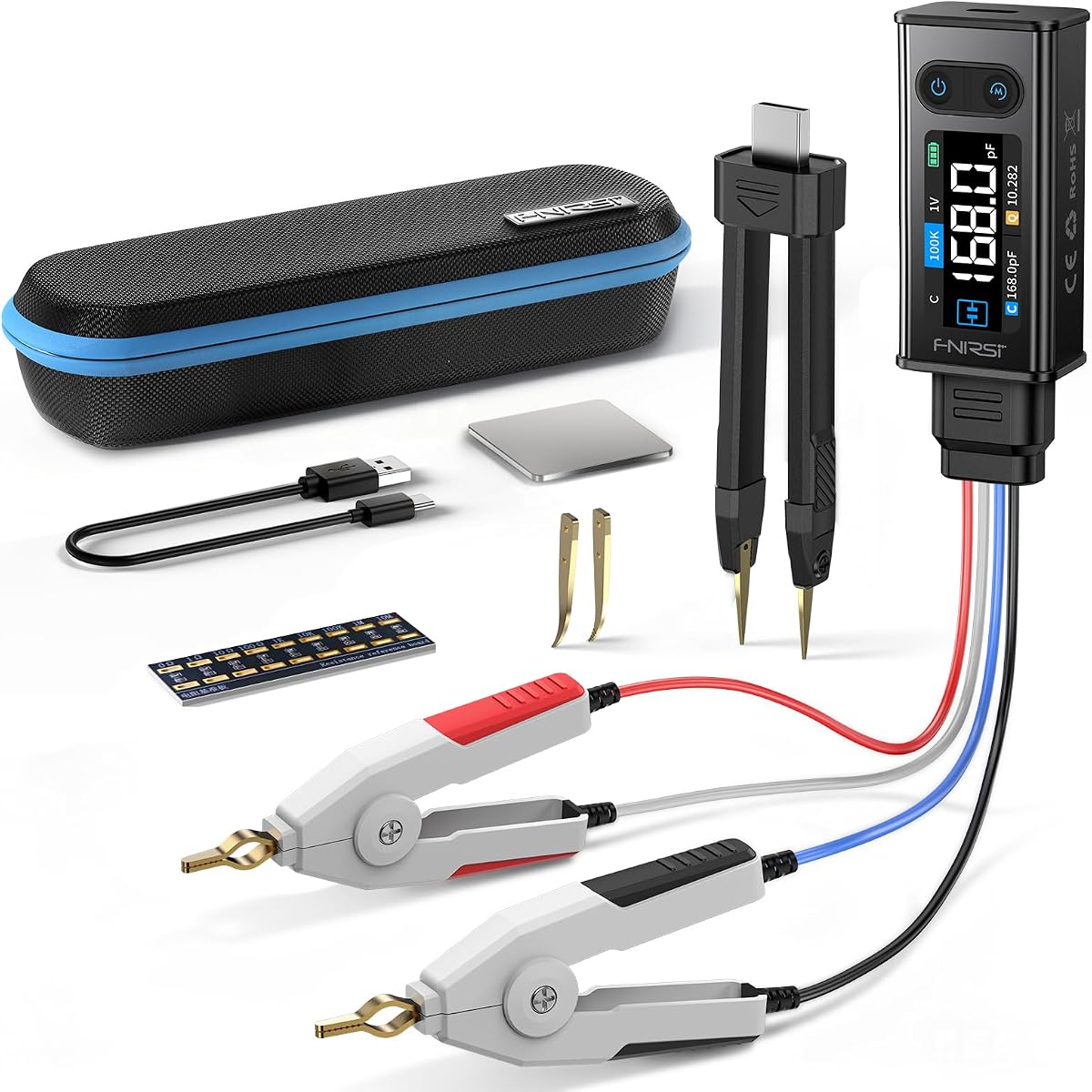
The FNIRSI LC1020E is a highly capable Lcr Meter designed for precise component testing. With a 4.7 rating from users, it stands out for its dual parameter display and extensive measurement features that cater to both hobbyists and professionals.
We may earn a commission when you buy through this link, at no additional cost to you.
Its standout qualities include the ability to show main and secondary parameters simultaneously, which speeds up diagnosis significantly. The 19,999 count display ensures high precision, and the adjustable test voltages allow for safe testing of sensitive components without damage.
While it offers exceptional performance, users must perform open and short calibration before use to ensure accuracy. Additionally, the compact size might feel small for those used to bulkier benchtop units, but the portability is a major plus for fieldwork.
This unit is ideal for anyone needing reliable L, C, and R measurements with advanced features like sorting and data hold. We recommend it as the top pick for its balance of price, performance, and user-friendly design in today's market.
The sorting mode calculates relative error against preset tolerances, alerting you via sound or LED when components fail or pass specific criteria.
Open and short calibration functions help eliminate stray impedance, ensuring your measurements reflect the true value of the device under test.
We may earn a commission when you buy through this link, at no additional cost to you.
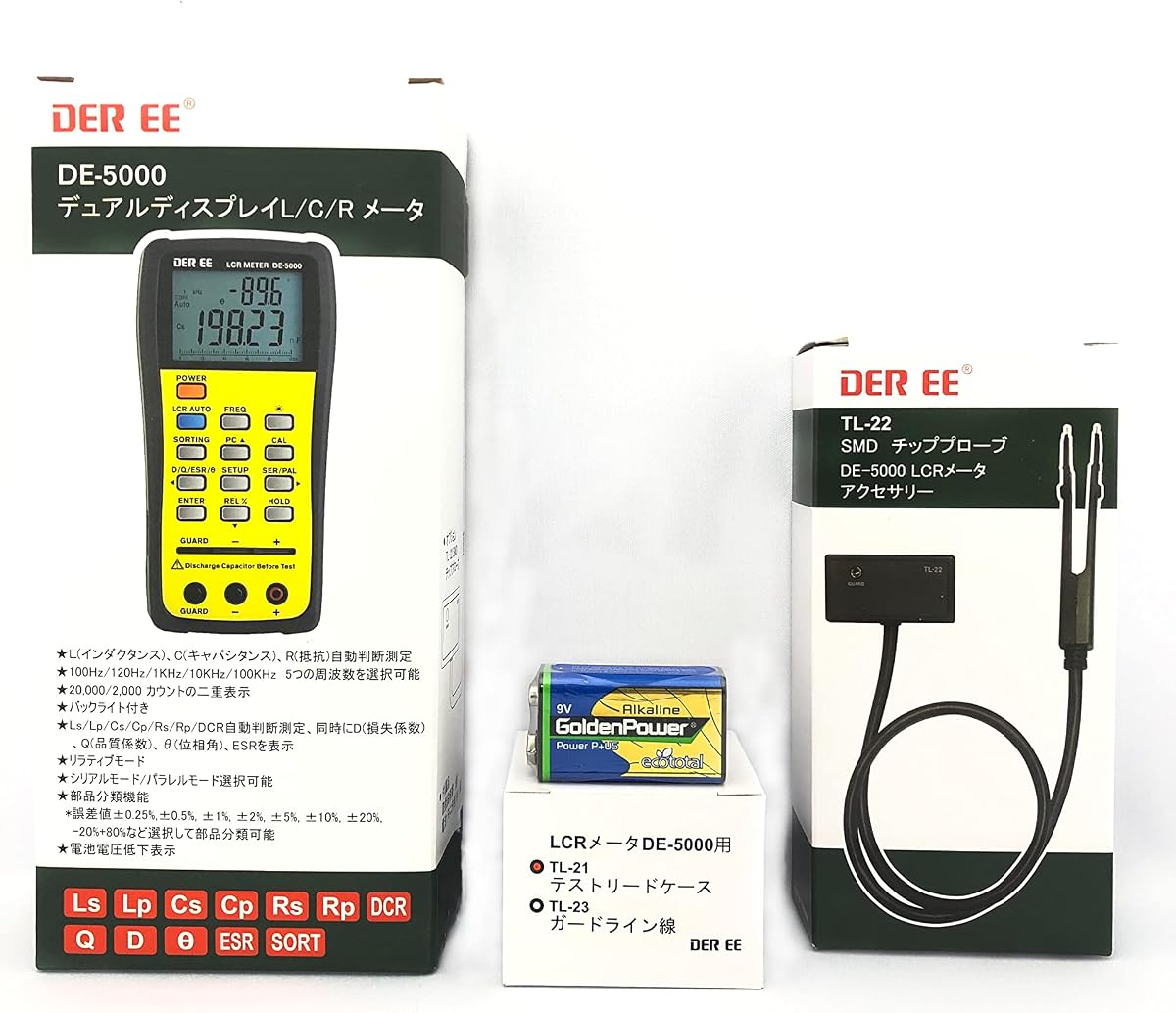
The DE-5000 Handheld Lcr Meter is a trusted tool known for its robust build and reliable performance. It offers a dual display that shows primary and secondary parameters, making it easy to analyze components like capacitors and inductors quickly.
We may earn a commission when you buy through this link, at no additional cost to you.
Users appreciate the auto-ranging capability which simplifies the testing process by selecting the correct range automatically. The ability to choose test frequencies from 100Hz to 100kHz provides flexibility for various circuit types and component values.
A trade-off is the lack of modern charging ports like USB-C, relying instead on traditional battery options. The interface is functional but less intuitive than newer models with color TFT screens, which may take some getting used to.
This meter is best for technicians who value accuracy and manual control over modern digital features. It remains a solid choice for repair shops and labs needing a dependable handheld device for general LCR measurements.
Selecting specific test frequencies allows you to tailor the measurement to the component's characteristics, ensuring accurate results across different impedance levels.
The sorting mode helps categorize components by tolerance, speeding up quality control processes in production or repair environments significantly.
We may earn a commission when you buy through this link, at no additional cost to you.
The MATRIX MCR5200 is a high-precision benchtop Lcr Meter designed for professional R&D and quality control environments. With a 0.1% basic accuracy, it delivers the reliability needed for critical testing tasks in laboratories and production lines.
We may earn a commission when you buy through this link, at no additional cost to you.
Its key strength lies in its extensive frequency range from 40Hz to 200kHz, covering a vast array of component behaviors. The connectivity options like USB and RS232C allow seamless data transfer to computers for detailed analysis and record keeping.
While the accuracy is unmatched in this list, the unit is heavier and less portable than handhelds, limiting its use to fixed workspaces. The price is also significantly higher, reflecting its premium build and laboratory-grade specifications.
This model is the top choice for engineers who require the highest level of precision and data logging capabilities. We recommend it for professional settings where budget is secondary to measurement integrity and consistency.
Connect to a PC to save test data directly, enabling detailed analysis and long-term quality tracking without manual recording efforts.
Testing across such a wide frequency range ensures you can characterize components under conditions that mimic real-world operating environments accurately.
We may earn a commission when you buy through this link, at no additional cost to you.
This version of the De-5000 includes a complete set of accessories like the TL-21 and TL-22 leads, making it ready for immediate use out of the box. It maintains the high accuracy and dual display features of the standard model while adding more flexibility.
We may earn a commission when you buy through this link, at no additional cost to you.
Users value the comprehensive measurement modes including series and parallel options which are critical for understanding component impedance in real circuits. The display resolution supports up to 20,000 counts, providing clear readings even for small component variations.
A drawback is its reliance on batteries without modern rechargeable options, which can be inconvenient during long field sessions. Additionally, the unit is somewhat heavier than compact meters, which might cause fatigue during extended handheld use.
This meter is perfect for technicians who need a complete package without buying extra accessories separately. We recommend it for general electronics repair and maintenance tasks where reliability and comprehensive tooling are essential.
Included leads and carrying cases ensure you have everything needed to start testing immediately without hunting for additional tools.
Switching between series and parallel modes helps you get accurate impedance readings regardless of how the component is connected in the circuit.
We may earn a commission when you buy through this link, at no additional cost to you.
The Proster LCR Meter is an excellent entry-level tool for hobbyists who need reliable component testing without breaking the bank. It focuses on the essential measurements of inductance, capacitance, and resistance with a simple to use design.
We may earn a commission when you buy through this link, at no additional cost to you.
Its rotatable display is a standout feature that allows you to position the screen for optimal viewing without tilting the whole device. The unit offers a wide range of capacitance measurements and includes a protective storage bag for easy transport.
While it lacks the advanced sorting and high-speed features of premium models, it provides sufficient accuracy for general DIY projects and basic troubleshooting. The 18-month quality guarantee adds peace of mind for new users entering this space.
This unit is ideal for students and hobbyists building small electronic projects. We recommend it as the best budget option for those needing a straightforward, functional Lcr Meter for home workbenches.
Adjust the screen angle to read results comfortably from any position, reducing strain during long testing sessions or awkward angles.
Includes all necessary test leads and a storage bag, ensuring you have a complete setup ready for use right out of the box.
We may earn a commission when you buy through this link, at no additional cost to you.
The FNIRSI LCR-ST2 is a specialized Lcr Meter designed for both SMD and through-hole components, making it a versatile tool for modern electronics work. It integrates a tweezer design which is perfect for testing small surface mount parts directly on PCBs.
We may earn a commission when you buy through this link, at no additional cost to you.
Its primary and secondary display features provide thorough analysis similar to larger units, and the auto sorting function helps identify abnormal components quickly. The rechargeable battery with Type-C charging adds convenience for long-term use in the lab or field.
The compact size comes with a small display that may be hard to read in poor lighting conditions. Battery life is decent but requires regular charging if used extensively throughout the day without access to power sources.
This meter is best for technicians working heavily with SMD components who need a portable and accurate tool. We recommend it for its unique combination of tweezer utility and standard Lcr measurement capabilities.
The gold-plated tweezer tips allow for quick and precise testing of tiny components without needing extra fixtures or leads.
The small form factor and magnetic back make it easy to secure on metal surfaces, freeing up your hands during component assembly.
We may earn a commission when you buy through this link, at no additional cost to you.
The Peak Atlas LCR45 is a straightforward Lcr Meter that prioritizes ease of use and measurement resolution. It offers a high user rating, reflecting its reliability and effectiveness for basic to intermediate electronic testing tasks.
We may earn a commission when you buy through this link, at no additional cost to you.
Its enhanced resolution allows for precise readings of small values like 0.2uH and 0.2pF, which is vital for accurate component identification. The hold function keeps the reading on screen, making it easy to record values without needing a second person.
While it lacks advanced features like data logging or automatic sorting, the simple menu system ensures that you spend less time navigating settings and more time testing. The trade-off is limited connectivity for saving data to other devices.
This unit is ideal for hobbyists and educators who prefer a no-fuss tool that gets the job done reliably. We recommend it for those who value high resolution and simplicity over complex features.
The ability to resolve values as low as 0.2pH or pF ensures you can detect subtle component variations that other meters might miss.
An easy menu system reduces the learning curve, allowing users to focus on testing rather than complex configuration steps.
We may earn a commission when you buy through this link, at no additional cost to you.
The B&K Precision 879B is a deluxe handheld Lcr Meter known for its solid build and dual display. It offers a backlit screen which is a significant advantage for working in dimly lit areas or dark panels during repairs.
We may earn a commission when you buy through this link, at no additional cost to you.
Its compact dimensions and included USB interface cable make it easy to transport and connect to computers if needed for data transfer. The device uses standard 9V batteries which are widely available, ensuring you are never stuck without power for long.
While it lacks some of the automatic features found in newer models, its dual display provides clear visibility of both primary and secondary parameters. The lack of rechargeable batteries might be inconvenient for users who prefer charging over disposable cells.
This meter is best for professionals who need a rugged and portable tool with a clear display. We recommend it for field service engineers who require reliable measurements on the go.
The illuminated screen ensures you can read values clearly even in low-light conditions without needing external lighting sources.
Using 9V batteries makes replacement quick and easy anywhere, reducing downtime when you run out of power during field work.
We may earn a commission when you buy through this link, at no additional cost to you.
The Extech LCR200 is a versatile Lcr Meter that offers a built-in test fixture, simplifying the testing process for passive components. Its dual backlit display ensures readability in various lighting conditions, making it a solid choice for general electronics maintenance.
We may earn a commission when you buy through this link, at no additional cost to you.
The unit supports five selectable test frequencies and includes calibration options to eliminate stray impedance. This allows for accurate measurements across different component types and values, ensuring consistent results over time.
While it provides good versatility, the weight is higher than other handhelds, which might limit comfort during prolonged use. The feature set is balanced but may not satisfy advanced users looking for high-speed automated sorting or data logging.
This meter is ideal for technicians who need a reliable tool with a built-in fixture for bench work. We recommend it for general repair shops where ease of use and clear display are top priorities.
The integrated test fixture allows you to insert components directly without needing external leads, reducing setup time and improving consistency.
Open and short calibration options help zero out lead resistance and capacitance, ensuring your readings are as accurate as possible.
We may earn a commission when you buy through this link, at no additional cost to you.
The Pro1-100KHz Lcr Meter offers a high accuracy rating of 0.1% and includes smart SMD tweezers for precision testing. It has received a perfect user rating, reflecting its quality and reliability for professional and serious hobbyist applications.
We may earn a commission when you buy through this link, at no additional cost to you.
Its ability to test diodes and switch between three voltage levels makes it a multifunctional tool for various component checks. The wide measurement range supports everything from small inductors to large capacitors, ensuring versatility across different projects.
While the price is higher than budget models, the accuracy and included accessories justify the investment for professional use. The requirement for precise setup and calibration means it may take a bit more time to master compared to simpler units.
This meter is best for those who demand high precision and versatile testing capabilities in one unit. We recommend it for professionals and advanced hobbyists who need reliable results for critical electronic projects.
Beyond standard LCR measurements, the diode test function adds value by allowing quick checks of semiconductor components directly.
A basic accuracy of 0.1% ensures that even the smallest component variations are detected, which is crucial for high-quality repairs.
We may earn a commission when you buy through this link, at no additional cost to you.
Choosing the right Lcr Meter depends on your specific needs and environment. We have identified key factors that will help you select the best device for your applications.
Accuracy determines how close your measurements are to the true value. High accuracy is vital for professional repairs and lab work but may not be necessary for casual hobby projects. Look for units with at least 0.5% accuracy for reliable general use.
Higher accuracy models often come at a higher price point but ensure you can trust your component values for critical circuit repairs.
Different components behave differently at various frequencies. A wider frequency range allows you to test a broader spectrum of parts from audio to RF applications. Ensure the meter supports at least 100Hz to 100kHz for most common needs.
Selecting a meter with the right frequency range ensures that your readings reflect how the component will perform in its actual circuit.
A clear display with dual parameter support helps you see multiple values at once. Backlit screens or color TFT displays improve readability in different environments. Consider the ease of navigation through menus to avoid frustration during testing.
An intuitive interface and readable screen save time and reduce errors when you are taking multiple measurements in quick succession.
If you work in the field, a lightweight handheld unit with long battery life is essential. Benchtop models are more stable but less portable. Check if the device uses rechargeable batteries or standard cells for convenience.
Portability ensures you can take the meter to the component, while proper power management prevents interruptions during critical testing sessions.
Advanced models offer USB or RS232C ports to save data to computers. This is useful for detailed analysis and quality tracking. If you do not need data logging, you can save money by choosing a model without these features.
Connectivity features enable you to keep digital records of your tests which is valuable for documentation and repeatable results.
Features like auto sorting and calibration modes can significantly speed up your workflow. Diode testing and continuity checks add versatility. Consider whether these extras are necessary for your specific type of work.
Extra features provide convenience and efficiency, but ensure you use them regularly to justify the added cost and complexity.
Durable materials and strong construction ensure the device withstands regular use in workshops. A good warranty gives you peace of mind against defects. Check the brand reputation for long-term reliability.
Quality build and warranty support protect your investment and ensure the meter lasts for years of consistent operation.
Budget models offer basic functionality while premium units provide high accuracy and automation. Determine your budget and match it with the features you actually need. Value is found in balancing cost with performance.
Invest in the best value for your specific needs rather than overspending on unnecessary features or settling for underpowered tools.
To begin using your Lcr Meter, ensure the device is powered on and the battery is fully charged if applicable. Always perform an open and short calibration before taking measurements to eliminate stray impedance. Follow the manufacturer's instructions for setting the correct frequency and test voltage.
Connect your component properly using the included test leads or tweezers. For accurate results, make sure the component is discharged and removed from any circuit power. Hold the probes steady and wait for the reading to stabilize on the display before recording the value.
After use, turn off the meter to preserve battery life and store it in a dry place away from extreme temperatures. Clean the probes regularly to maintain good contact and prevent oxidation. Keep the device in its carrying case to protect it from physical damage during transport.
An Lcr Meter is used to measure the inductance, capacitance, and resistance of electronic components. It provides detailed parameters like quality factor and dissipation factor which are essential for quality control and circuit troubleshooting.
While multimeters can measure resistance, they often struggle with precise inductance and capacitance values. An Lcr Meter offers higher accuracy and additional parameters like ESR and phase angle for deeper component analysis.
Yes, regular calibration using open and short procedures ensures accurate measurements by removing stray impedance from test leads. This step is crucial for maintaining precision especially when working with high-precision components.
A range from 100Hz to 100kHz covers most common components effectively. Wider ranges allow for testing RF components or specialized circuit parts but may not be necessary for general electronics work.
Some specialized Lcr Meters come with SMD tweezers designed to test surface mount components directly. Standard models might require leads which can be challenging for very small parts on a PCB.
Handheld units are ideal for fieldwork and portability while benchtop models offer higher accuracy and stability for lab environments. Consider where you will mostly be working before deciding on the form factor.
We have reviewed ten excellent Lcr Meter options ranging from budget-friendly units to high-precision benchtop models. The FNIRSI LC1020E stands out as the best overall choice for its balance of features and affordability for most users.
Prioritize accuracy and frequency range based on the types of components you work with most often. If you need portability, handheld models like the FNIRSI LCR-ST2 offer great versatility with modern features.
Remember that prices and availability can change so always verify the current details on the retailer site before purchasing. Selecting the right tool will improve your repair efficiency and ensure reliable results in your electronic projects.