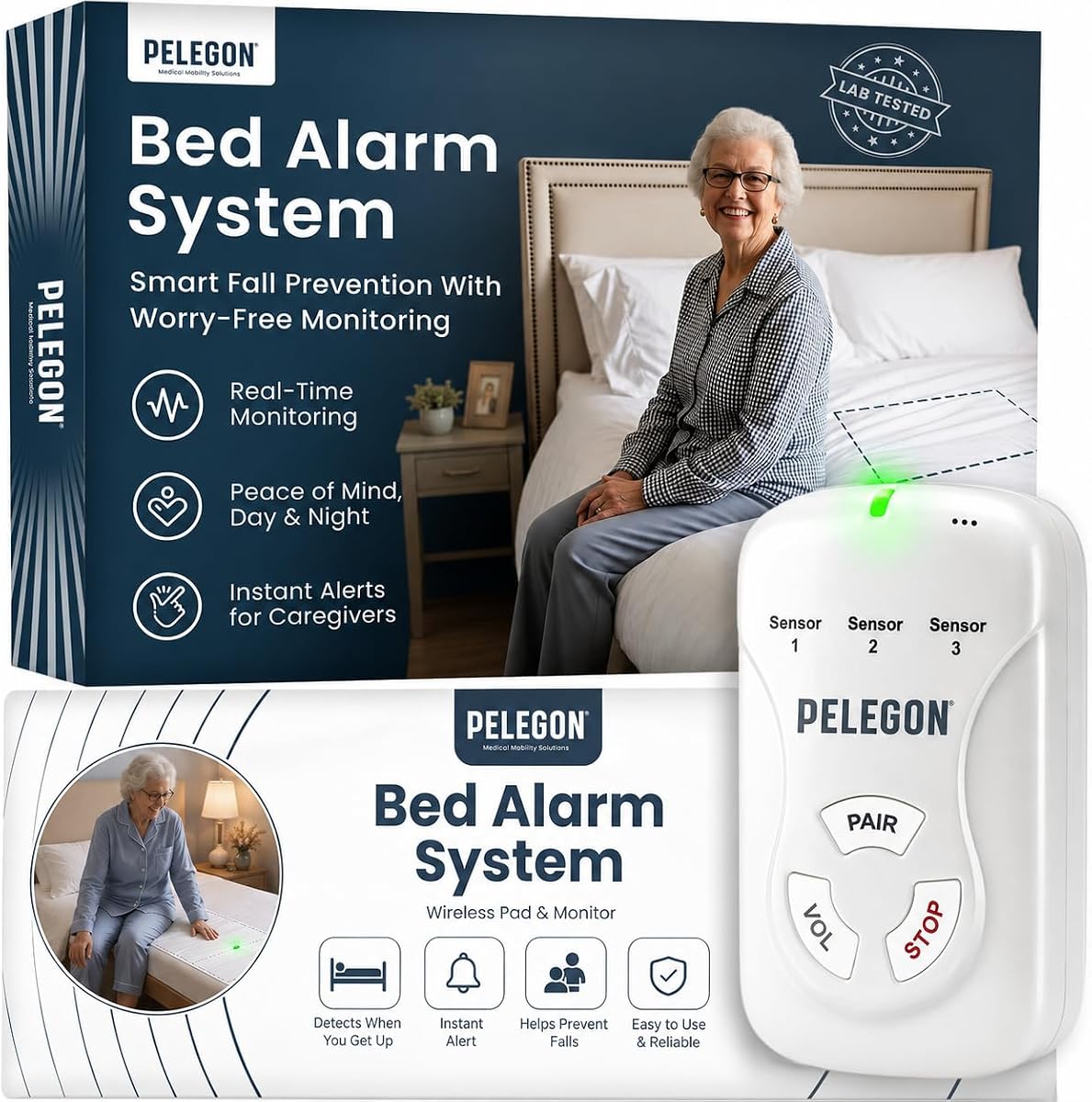
PELEGON Bed Alarms for Elderly Dementia Patients
4.7Editor score
Long range 328ft coverage
Customizable sound or vibration
Tool-free setup design
Finding the right safety device is crucial when caring for loved ones with mobility challenges. A reliable bed alarm for elderly and dementia patients helps prevent falls by alerting caregivers when a person attempts to leave the bed unexpectedly.
We analyzed ten highly-rated systems based on sensor accuracy, wireless range, and ease of use. This list covers both pressure-sensitive pads and motion sensors to help you choose the best fit for your home environment.
Each pick includes detailed pros and cons to highlight real-world performance. Keep in mind that prices and availability may change, so verify the latest details before purchasing to ensure you get the best value.
4.7Editor score
4.8Editor score

4.5Editor score
As an Amazon Associate we earn from qualifying purchases.
The following table provides a side-by-side comparison of all ten systems to help you quickly identify key differences in features, sensor types, and connectivity options.



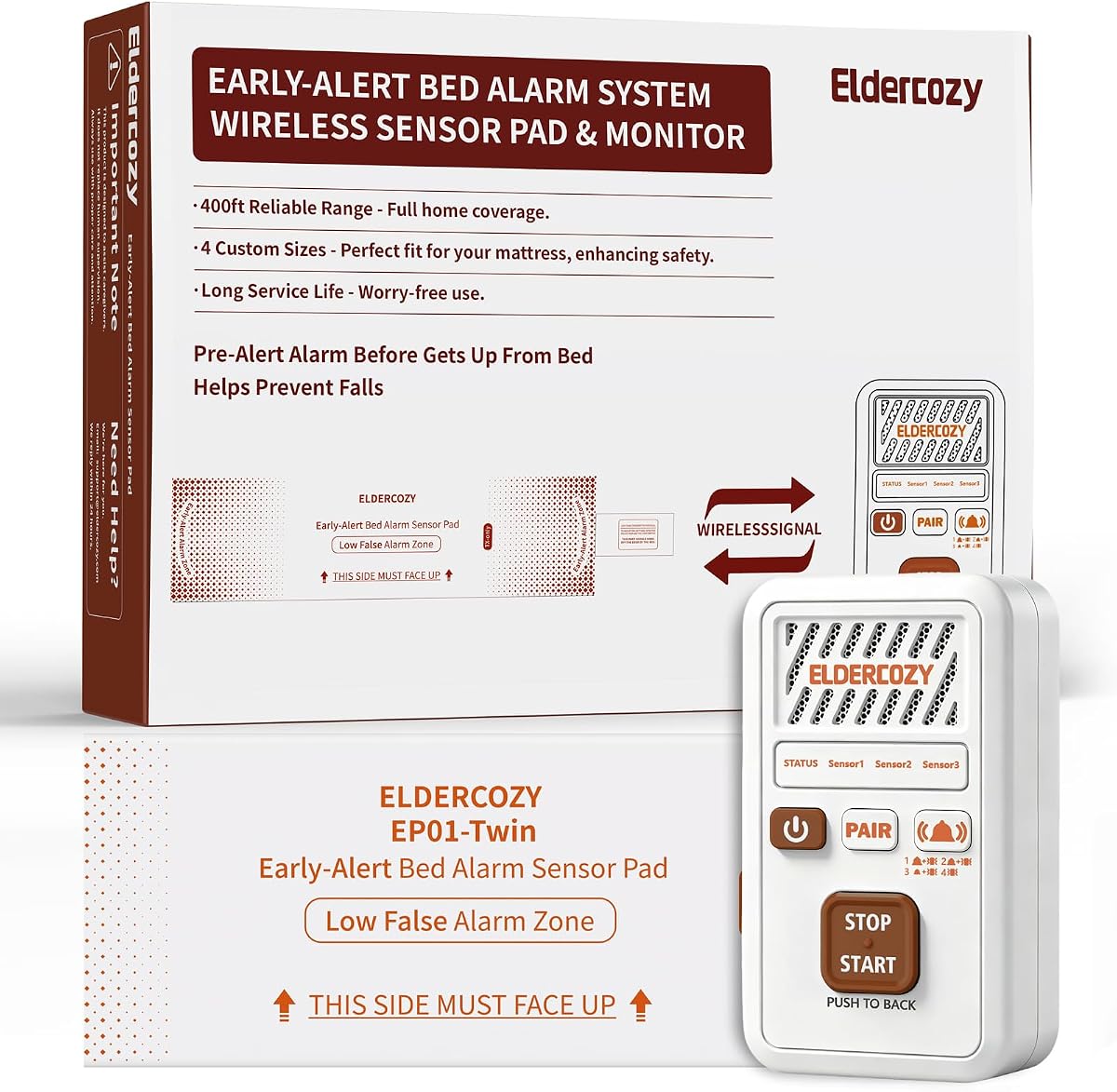
This system stands out for its unique TPU material which eliminates the crinkly noise common with other sensors. It earned a high rating because it detects movement at the hip level, alerting caregivers before the patient fully stands up.
We may earn a commission when you buy through this link, at no additional cost to you.
The wireless signal reaches up to four hundred feet, giving caregivers significant freedom to move around the house. The design focuses on comfort by using a soft composite that does not disturb sleep when the patient shifts positions.
While the price is higher than basic models, the replaceable batteries mean you do not need to replace the whole unit when power runs low. The caregiver mode allows you to pause the alarm temporarily during assistance, reducing false alerts.
This product is ideal for those prioritizing comfort and early detection. It is a strong choice for dementia care where avoiding startling noises and ensuring dignity are primary concerns for both patients and families.
The system is designed to trigger when the patient sits on the edge of the bed, offering a critical window to intervene before a fall occurs.
The sensor pad uses a skin-friendly composite that resists water and does not make noise, ensuring the patient sleeps peacefully throughout the night.
We may earn a commission when you buy through this link, at no additional cost to you.
PELEGON focuses heavily on the needs of dementia care by providing a system that alerts caregivers to wandering risks. It received strong feedback for its simplicity and ability to provide immediate alerts when movement is detected on the sensor pad.
We may earn a commission when you buy through this link, at no additional cost to you.
The pager unit is lightweight and clips easily to a belt, allowing caregivers to remain mobile. The range is sufficient for most home layouts, and the setup requires no tools, making it accessible for anyone to install quickly.
Some users may find the price slightly higher than basic options, but the durability and specific focus on dementia support justify the cost. The ability to customize sound and volume ensures the alert is noticeable without being disruptive.
This is an excellent choice for families managing dementia patients who may wander or get up at night. It provides peace of mind through reliable detection and a user-friendly design that does not complicate daily care routines.
The system is engineered to help caregivers respond sooner to nighttime movement, reducing the risk of unsafe wandering and potential accidents during the night.
Caregivers can choose between sound alerts with adjustable volume or vibration only, offering flexibility for shared rooms or quiet overnight monitoring environments.
We may earn a commission when you buy through this link, at no additional cost to you.
This motion sensor system offers excellent value for money by eliminating the need for a pressure-sensitive pad. It detects when feet touch the floor, providing a reliable way to monitor bed exits without placing equipment directly on the mattress.
We may earn a commission when you buy through this link, at no additional cost to you.
The wireless range is impressive at over nine hundred feet, making it suitable for large homes or multi-story buildings. The sensor can be placed on the floor or even near a door, adding versatility to how it monitors the environment.
Because it does not use a pad, there are no incontinence concerns to manage. However, it may not trigger if the patient sits up without putting their feet down, which is a trade-off for the simpler design.
It is an ideal choice for budget-conscious caregivers who want wide coverage without spending much. The dual power options ensure the device stays active even if one power source fails, adding to its reliability.
The motion sensor sits on the floor to detect feet touching the ground, avoiding the mess and maintenance issues associated with in-bed pressure pads.
This device can run on batteries or a Micro USB cable, ensuring continuous operation and flexibility in power management for caregivers.
We may earn a commission when you buy through this link, at no additional cost to you.
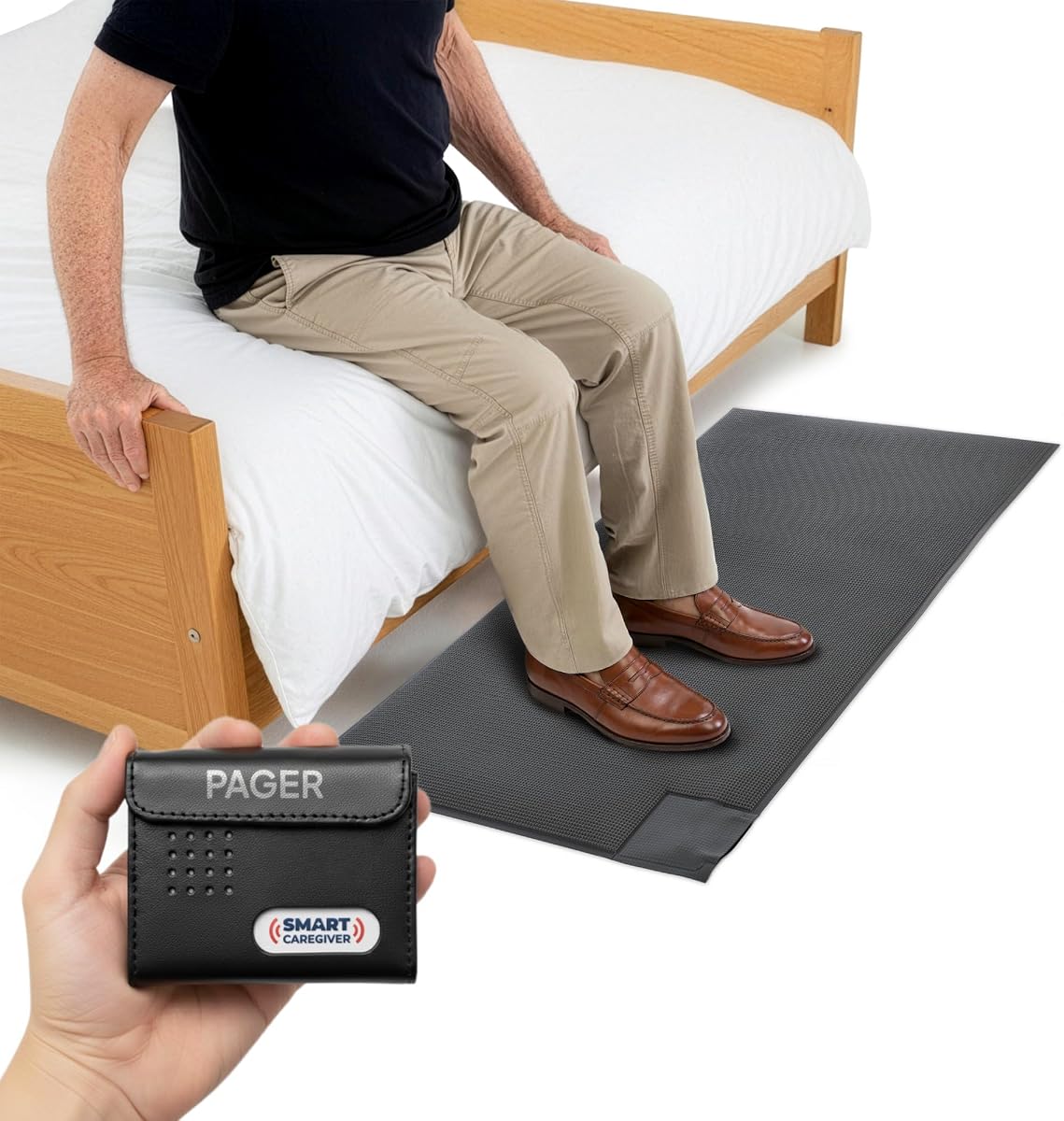
Smart Caregiver offers a classic pressure pad solution that has been used in care facilities for years. It is built to be durable, with a vinyl sensor that can be easily cleaned and sealed against moisture damage from accidents.
We may earn a commission when you buy through this link, at no additional cost to you.
The alarm unit can be mounted on a wall or bed, keeping it accessible for caregivers. It alerts immediately when pressure is removed from the pad, giving a consistent signal that helps caregivers respond promptly to bed exits.
The main limitation is the wired connection between the pad and the monitor which can limit placement options compared to wireless systems. However, the simplicity means there is less to go wrong with the setup over time.
This is a solid option for those who prefer a proven, simple design. It is particularly useful in environments where durability and easy cleaning are more important than wireless features or long range capabilities.
The sensor pad is sealed with soft vinyl and foam interior, making it resistant to fluids and easy to wipe down for hygiene maintenance.
The monitor can be mounted on the bed, wall, or nearby surfaces, allowing caregivers to position the alarm where it is most visible and accessible.
We may earn a commission when you buy through this link, at no additional cost to you.
This system uses a large floor mat to detect weight when a patient steps out of bed. The size ensures that it is difficult to avoid detection, making it highly effective for preventing falls during nighttime transitions.
We may earn a commission when you buy through this link, at no additional cost to you.
The wireless pager allows caregivers to remain in another room without worrying about noise disturbing the patient. The vibration feature is particularly useful for quiet monitoring without waking others in the household.
The larger size of the mat means it is less prone to false alarms caused by small movements, but it does require space on the floor. This might be a consideration in smaller bedrooms with limited free space.
It is a robust solution for those who want a physical barrier to detection rather than a pressure pad. The system provides freedom for caregivers to manage other tasks while staying informed of the patient's movements.
The 24 by 48 inch mat covers a significant area, ensuring that when someone steps on it, the weight sensor reliably triggers the alert system.
This device can be paired with other sensors like door alarms, allowing for a comprehensive network that monitors multiple zones within a home or facility.
We may earn a commission when you buy through this link, at no additional cost to you.
This system is designed to be part of a larger network, supporting up to six different sensors. It uses a full-coverage weight sensor that sends alerts wirelessly when the patient leaves the bed or chair.
We may earn a commission when you buy through this link, at no additional cost to you.
The included pager offers both sound and vibration, ensuring caregivers can choose the alert method that best suits their environment. The company emphasizes reduced false alarms by using an extra-large contact sensor.
The network capability makes this a great choice for multi-room monitoring without needing separate monitors. It is backed by a US-based company that provides customer support, which adds a layer of trust for buyers.
It is a balanced option for those needing both bed and chair monitoring. The flexibility to add sensors later allows the system to grow with the caregiving needs of the patient over time.
The pager can support up to six different sensors, allowing caregivers to monitor multiple beds, chairs, or doorways with a single device.
The pad is engineered with an extra-large contact sensor to minimize false alerts, building trust in the system's reliability for daily use.
We may earn a commission when you buy through this link, at no additional cost to you.
This device offers a unique silent and vibrate mode that is perfect for shared rooms. The sensor can rotate 360 degrees to adjust sensitivity, which helps avoid false alarms from incontinence or restless movements.
We may earn a commission when you buy through this link, at no additional cost to you.
The receiver is portable and can be charged via Type-C, ensuring that caregivers do not need to replace batteries constantly. It includes many ringtones and volume levels to customize the notification experience.
While it is flexible, the motion sensor requires careful placement to work effectively. If the patient does not move enough to trigger the sensor, it may not alert as expected compared to pressure pads.
It is a great tool for caregivers who want a quiet solution that does not startle the patient. The portable charger is a modern feature that adds convenience for long-term daily use.
The alarm supports silent and vibrate modes to allow caregivers to monitor without making noise that might disturb the patient or others in the room.
The receiver uses a Type-C charging port making it easy to keep powered without needing frequent battery changes for portable use.
We may earn a commission when you buy through this link, at no additional cost to you.
This system is known for its high decibel alarm which is useful in larger environments where softer alerts might be missed. It uses a motion sensor that is factory paired to the receiver for immediate setup.
We may earn a commission when you buy through this link, at no additional cost to you.
The LED light flashes alongside the sound to provide visual alerts for caregivers with hearing impairments. It offers a long range that ensures the signal reaches across large spaces without interference.
The loud nature of the alarm means it should be used carefully so as not to disturb neighbors or other family members in the household. It is best for those who need a strong and noticeable alert to respond quickly.
It is a practical solution for those who prioritize a loud notification system. The power options and long range make it a versatile tool for monitoring care in various home or facility settings.
The receiver can emit a 113 dB alarm sound ensuring that the alert is loud enough to be heard in large spaces or noisy environments.
The device includes an LED light that flashes to complement the sound alert, offering visual support for caregivers who may need extra notice.
We may earn a commission when you buy through this link, at no additional cost to you.
This system comes with both a bed and a chair pad allowing for flexible monitoring of where the patient sits. It is designed with a clip-on monitor that can move easily between the bed and chair positions.
We may earn a commission when you buy through this link, at no additional cost to you.
The pads are made of durable vinyl that protects against moisture and is easy to clean. The alarm alerts when pressure is removed, signaling that the patient is attempting to stand up from either position.
The wired connection keeps the setup simple but may limit where the monitor can be placed. However the ease of use and dual pads make it a convenient choice for daily care routines.
It is a good option for families who need to monitor chair exits as well as bed exits. The inclusion of both pads saves cost and ensures coverage for different types of fall risks.
The system includes both a bed pad and a chair pad allowing caregivers to monitor the patient's movement from multiple seating positions easily.
The monitor can be clipped to the chair or headboard making it easy to switch between bed and chair use without needing multiple devices.
We may earn a commission when you buy through this link, at no additional cost to you.
This system uses a large pad to detect pressure changes when a patient tries to leave the bed. It offers music alerts and vibration modes to give caregivers flexible options for how they want to be notified.
We may earn a commission when you buy through this link, at no additional cost to you.
The pad is water resistant and easy to clean ensuring it stays hygienic over time. The wireless range is sufficient for most single room setups and the pager is portable for mobile caregivers.
The rating is lower than other models possibly due to sensor sensitivity issues that can cause missed alerts. However for basic needs it provides a straightforward setup that does not require complicated configuration.
It is a decent option for those looking for an affordable and simple system. The music alerts can make notifications less jarring compared to standard alarms for both the caregiver and the patient.
The sensor pad is made from tear and water resistant materials allowing it to be easily wiped clean and maintained for long-lasting hygiene.
The pager includes music alerts in addition to standard sounds and vibration, offering a softer notification method for sensitive patients.
We may earn a commission when you buy through this link, at no additional cost to you.
Selecting the right alarm depends on the specific needs of your patient and your living situation. This guide outlines the critical factors to consider.
Sensor types vary from pressure pads placed under the sheet to motion sensors placed on the floor. Pressure pads detect weight removal which is good for immediate bed exit alerts. Motion sensors detect movement like feet hitting the floor which can be cleaner but may miss sitting up.
Consider how far you need to be from the patient to hear the alarm. Some systems offer ranges up to nine hundred feet which is ideal for large homes. Ensure the signal is strong enough to pass through walls or floors if needed.
Alerts can be sound only, vibration, or both. Vibrations are useful if you want to wake silently without startling the patient. Check that the volume is adjustable and loud enough to be heard over household noise or sleeping partners.
If using a pad under the sheet, the material matters for sleep quality. Look for soft TPU or vinyl that does not make noise when the patient moves. Waterproof options are essential for incontinence protection to extend the life of the device.
Setup should be straightforward without complex wiring. Look for systems that allow tool-free installation. A simple reset button and clear status lights help you know the device is working without needing technical skills.
Check whether the system uses replaceable batteries or rechargeable options. Battery life should be long enough to avoid frequent changes. Dual power options like USB or AC adapters ensure continuous monitoring without interruptions.
Some systems allow multiple sensors to connect to one pager. This is useful if you need to monitor multiple beds or doors. Expandable networks let you add sensors as needs change without buying new monitors.
The alarm should be durable enough for daily use. Look for sealed pads that are easy to wipe clean. A warranty and support from the manufacturer also add value by ensuring help is available if issues arise.
Regularly check the battery levels and clean the sensor pad with a damp cloth if it is waterproof. Keep the receiver in a consistent location so you can quickly identify the source of an alert.
A bed alarm detects when a patient leaves the bed by using a pressure pad or motion sensor. When movement is detected, it sends a wireless signal to a receiver alerting the caregiver immediately.
Yes, bed alarms are designed to be safe. They use low voltage sensors that do not harm the patient. The alarms are typically set to alert caregivers quietly to avoid startling the patient unnecessarily.
Many systems come with both bed and chair pads. If not, some allow you to place the sensor on a chair seat to detect when the patient stands up from a seated position.
Ranges vary by model but can be from 300 feet to over 900 feet. It is important to check the specific product specs to ensure it covers your home layout effectively.
No, most modern bed alarms are designed for DIY setup. They often feature tool-free installation and simple instructions allowing you to set them up in minutes without professional help.
Most sensor pads are made of vinyl or waterproof materials. You can wipe them down with a damp cloth and mild soap. Avoid submerging them unless they are specifically rated as fully washable.
Prices and availability can change so always check current listings before buying. Ensure you have the right setup in place to provide consistent monitoring and care for your family members.