
ESP32-S3-Nano Microcontroller
5.0Editor score
Integrated 8MB PSRAM
Seamless Arduino and MicroPython switching
HID profile support for peripherals
This guide compares the top Arduino Nano ESP32 boards and compatible development kits for IoT wireless connectivity and advanced embedded projects in 2026.
Choosing the right microcontroller is essential for modern IoT and embedded projects. The Arduino Nano ESP32 offers powerful wireless connectivity and compact design for makers and engineers seeking efficient development tools.
We evaluated ten top-rated boards and kits based on processing power, connectivity options, ease of use, and community support. Our analysis highlights the best choices for various project requirements and skill levels.
Each pick showcases key features and ideal use cases to help you decide. Prices and availability may change so check current listings before purchasing your next development board or starter kit.
5.0Editor score

4.6Editor score

4.7Editor score
This comparison table outlines the core specifications and capabilities of each selected board to help you identify the best fit for your specific project requirements.


The Arduino Nano ESP32 stands out as a premier choice for developers seeking a balance of power and ease of use. It holds a strong rating and delivers on its promises of wireless connectivity and flexible programming options.
We may earn a commission when you buy through this link, at no additional cost to you.
Its ESP32-S3 microcontroller offers significant computational power suitable for edge AI and real-time data processing. The board supports both Arduino IDE and MicroPython making it accessible for beginners and advanced users alike.
While the price is higher than generic alternatives the build quality and official support justify the cost. Users may need to invest time in learning MicroPython but the flexibility is worth the trade-off.
We recommend this board for projects requiring robust wireless features and reliable performance. It is ideal for smart home systems wearables and IoT applications where stability and connectivity are paramount.
The board supports both Wi-Fi and Bluetooth 5.0 enabling robust connections to networks and devices without external modules.
Developers can choose between C++ via Arduino IDE or Python via MicroPython for faster prototyping and easier syntax.
We may earn a commission when you buy through this link, at no additional cost to you.
This compact development board offers exceptional value with a perfect user rating. It delivers high performance through its integrated ESP32-S3R8 chip and substantial memory resources for complex projects.
We may earn a commission when you buy through this link, at no additional cost to you.
The ability to switch between Arduino and MicroPython provides flexibility without needing multiple boards. Its integration with Arduino IoT Cloud allows remote monitoring and control for enhanced project capabilities.
Trade-offs include relying on a third-party manufacturer which might affect long-term support availability. However the hardware quality and feature set make it a strong contender for budget-conscious builders.
Ideal for hobbyists and small projects this board balances cost and capability effectively. It is a great entry point for those needing Wi-Fi Bluetooth and ample storage.
With 16MB flash and 8MB PSRAM this board handles large datasets and complex firmware without slowdowns.
Arduino IoT Cloud integration enables easy remote access and dashboard creation for your IoT devices.
We may earn a commission when you buy through this link, at no additional cost to you.
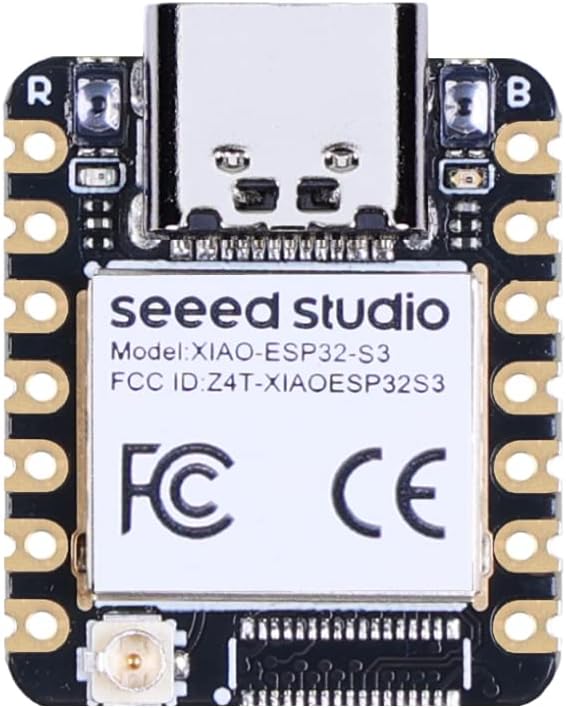
The Seeed Studio XIAO ESP32S3 is designed for space constrained projects where size matters. It maintains strong performance while fitting into wearable or hidden installation contexts.
We may earn a commission when you buy through this link, at no additional cost to you.
Its power design supports lithium battery charging and deep sleep modes which extend device life significantly. The RF performance allows for long range communication even with its compact antenna.
While the small size is great for wearables it can make breadboarding slightly more challenging without adapters. This is a minor inconvenience given the benefits it brings to portable projects.
We recommend this for wearable tech robotics and portable sensors. It offers a perfect balance of size efficiency and connectivity for modern embedded applications.
Supports battery charging and low power modes allowing projects to run longer on a single charge.
Delivers reliable communication up to 100 meters with proper antenna configuration for remote sensing.
We may earn a commission when you buy through this link, at no additional cost to you.
This board pushes the boundaries of what a microcontroller can do with its RISC-V architecture and extensive interface options. It is designed for projects requiring heavy image processing or secure operations.
We may earn a commission when you buy through this link, at no additional cost to you.
Features like MIPI-CSI and DSI allow direct connection to cameras and displays. The inclusion of Ethernet and robust security features makes it suitable for industrial and high-end applications.
The complexity and cost are higher than standard boards so it is not for every maker. However for those needing specific interfaces and security it is unmatched in this category.
Best for professional developers and advanced prototypes requiring high bandwidth and security. It supports complex tasks like video processing and secure data handling efficiently.
Includes codecs and accelerators for handling image and voice data directly on the chip.
Offers secure boot flash encryption and hardware protection mechanisms for robust data safety.
We may earn a commission when you buy through this link, at no additional cost to you.
This three-pack offers a practical solution for developers needing multiple units for testing or deployment. The boards are compact and designed for direct integration into larger carrier boards.
We may earn a commission when you buy through this link, at no additional cost to you.
The castellated module design allows for surface mounting which is useful for custom PCB designs. Performance is stable with dedicated settings for power management and clock frequencies.
While it lacks the extensive features of more expensive boards it covers the essentials well. Buying three at once reduces unit cost significantly for projects requiring redundancy or mass production.
Ideal for prototyping stages or small batch production where multiple identical units are needed. It provides reliable wireless connectivity and processing in a compact form.
Castellated edges enable direct soldering onto custom boards for seamless integration.
Purchasing three units together lowers the average cost per board for larger projects.
We may earn a commission when you buy through this link, at no additional cost to you.
This kit is tailored for learners who want a complete package to jump into IoT development. It includes a robust ESP32 board along with numerous sensors and peripherals for diverse projects.
We may earn a commission when you buy through this link, at no additional cost to you.
With step by step tutorials covering over 30 projects you can learn coding and electronics together. The components are carefully selected to ensure reliability and ease of use.
The board itself is standard size which is good for breadboarding but less portable than nano versions. Some users might find extra components unnecessary but they provide valuable learning opportunities.
Perfect for students and new hobbyists entering the world of smart devices. It removes the guesswork of selecting parts and provides a structured learning path.
Comprehensive tutorials cover everything from basic circuits to advanced IoT applications step by step.
Includes motors displays and sensors to build weather stations controllers and interactive gadgets.
We may earn a commission when you buy through this link, at no additional cost to you.
The Arduino Nano 33 IoT is an excellent choice for projects prioritizing security and reliability. It features a secure element that ensures encrypted communication for data privacy.
We may earn a commission when you buy through this link, at no additional cost to you.
It includes pre-soldered headers which makes breadboarding effortless. The board is fully supported by the Arduino IDE and community resources for smooth development.
Performance is lower than the latest ESP32-S3 models but sufficient for most IoT applications. This is an acceptable trade-off for enhanced security and official support.
We recommend this for smart home and enterprise IoT needs. It balances ease of use with robust security features essential for connected devices.
The secure element provides hardware level encryption for safe cloud communication and data privacy.
Pre-soldered headers simplify connections to breadboards and external components right out of the box.
We may earn a commission when you buy through this link, at no additional cost to you.
This board is a staple in the ESP32 community known for its reliability and extensive support. It provides essential Wi-Fi and Bluetooth capabilities for standard wireless projects.
We may earn a commission when you buy through this link, at no additional cost to you.
It supports various network modes including AP and STA for flexible deployment. The chips are well protected with RF filters ensuring stable performance in noisy environments.
While the architecture is older it remains highly capable for most use cases. It is an economical choice for those who do not need the latest features.
Best for general IoT prototyping and hobbyist projects. It offers a proven platform for wireless communication without unnecessary complexity.
Supports AP STA and combined modes to fit different network configurations and use cases.
Integrated RF filters and antenna ensure consistent signal quality in various environments.
We may earn a commission when you buy through this link, at no additional cost to you.
This three-pack offers a practical solution for developers needing multiple units for testing or deployment. The boards are compact and designed for direct integration into larger carrier boards.
We may earn a commission when you buy through this link, at no additional cost to you.
The castellated module design allows for surface mounting which is useful for custom PCB designs. Performance is stable with dedicated settings for power management and clock frequencies.
While it lacks the extensive features of more expensive boards it covers the essentials well. Buying three at once reduces unit cost significantly for projects requiring redundancy or mass production.
Ideal for prototyping stages or small batch production where multiple identical units are needed. It provides reliable wireless connectivity and processing in a compact form.
OTA support allows firmware updates via Wi-Fi eliminating the need for physical connections.
Modern USB-C port simplifies power and data transfer for easier development workflows.
We may earn a commission when you buy through this link, at no additional cost to you.
This board combines two powerful processors to deliver unmatched versatility for complex projects. It is designed for advanced users needing industrial features and built-in visual feedback.
We may earn a commission when you buy through this link, at no additional cost to you.
With CAN bus and Qwiic connectors it simplifies interfacing with sensors and automotive systems. The LED matrix allows for immediate visual output without external screens.
It is larger and more expensive than typical Nano boards but offers significantly more capability. The price is justified by the premium features included in a single unit.
Best for professional development and advanced prototypes requiring robust features. It bridges the gap between hobbyist boards and industrial controllers effectively.
A built-in 12×8 LED matrix allows displaying status and data without external displays.
CAN bus support enables reliable communication in automotive and industrial systems.
We may earn a commission when you buy through this link, at no additional cost to you.
Choosing the right board depends on project needs budget and experience level. These factors help you evaluate the options presented in this guide.
Look for dual-core processors like the ESP32-S3 which offer high speeds around 240 MHz. This allows handling complex tasks like AI and audio processing efficiently.
Higher clock speeds and RAM ensure smooth performance when running multiple tasks simultaneously.
Ensure the board supports Wi-Fi and Bluetooth 5.0 for modern connectivity standards. Check for additional interfaces like Ethernet or UART for specific industrial needs.
Verify that the wireless range and protocols match your application's requirements.
Confirm compatibility with Arduino IDE or MicroPython based on your coding preferences. Official support often translates to better documentation and community resources.
Choose boards that support the language you are most comfortable with to speed up development.
For battery-operated projects check for deep sleep modes and low power consumption ratings. Built-in battery charging circuits can simplify wearable or portable designs.
Efficient power design extends the life of your project and reduces the need for frequent charging.
Select a board size that fits your project enclosure. Nano and XIAO styles are ideal for wearables while standard sizes work best for breadboards.
Consider the layout of pins and headers to ensure easy connection to your components.
Secure elements and boot encryption are critical for projects handling sensitive data. Look for boards with hardware-level security to prevent unauthorized access.
Invest in security features early to avoid retrofitting complex safety measures later.
Balance cost against features to find the best value. Starter kits might cost more upfront but save money by including necessary components and tutorials.
Evaluate the total cost including accessories to determine if a board fits your budget.
Prioritize products from reputable vendors like Arduino or well-known third parties. Strong community support and documentation can solve issues faster.
Check for warranty options and customer service availability before purchasing.
Connect the board to your computer using a compatible USB cable. Install the required drivers and configure your IDE to recognize the device before uploading code.
Keep the board away from extreme temperatures and moisture to maintain reliability. Use heat sinks if your projects involve high power draw for extended periods.
Regularly back up your code and update firmware to fix bugs and improve performance. Clean dust from connectors gently to ensure stable electrical contact.
Yes, the Arduino Nano ESP32 is fully compatible with the Arduino IDE. You can install the required package in the Board Manager to enable support for this specific board.
Many of the selected boards support MicroPython alongside Arduino IDE. Check the specific product details to confirm compatibility and installation instructions.
The ESP32-S3 chip offers enhanced processing power, improved wireless connectivity, and native support for AI instructions, making it ideal for advanced IoT applications.
If you choose a starter kit, most necessary components are included. For standalone boards, you will need a USB cable, breadboard, and jumper wires for basic connections.
Firmware updates over Wi-Fi (OTA) are supported on boards like the ELEGOO ESP-32 Dev Boards. Configure OTA settings in your code to update devices remotely without USB.
Yes, many boards in this guide are beginner-friendly with strong community support. Starter kits provide tutorials that guide you through projects step by step.
The top picks include the Arduino Nano ESP32 for overall performance and the ESP32-S3-Nano for value. Each board offers unique features suited to different project demands.
Prioritize processing power and connectivity based on your specific application needs. Beginners may prefer kits with tutorials while professionals need high-end features like CAN bus.
Always check current prices and availability as these change frequently. Select the option that best aligns with your goals and budget for your next build.