
Vogzone for MCX4121A-ACAT
4.7Editor score
Mellanox ConnectX-4 Lx
Dual SFP28 ports
SR-IOV support
This expert guide compares the top 25GbE network cards for enterprise and personal use, evaluating performance, compatibility, and reliability to help you
High-speed networking is essential for modern data demands. A quality 25GbE network card ensures reliable data transfer, reduced latency, and seamless connectivity for servers, workstations, and storage systems in any environment.
We analyzed ten top-rated adapters based on controller performance, port flexibility, and OS support. Our list covers diverse needs from budget-friendly options to enterprise-grade solutions with advanced offloading and virtualization capabilities.
Each pick highlights key strengths and real-world suitability for your setup. Please note that availability and pricing may vary over time, so verify current details before making your final purchase decision online.
4.7Editor score

5.0Editor score

5.0Editor score
The following table offers a side-by-side comparison of all ten selected adapters to help you quickly identify the right choice based on your specific networking needs.


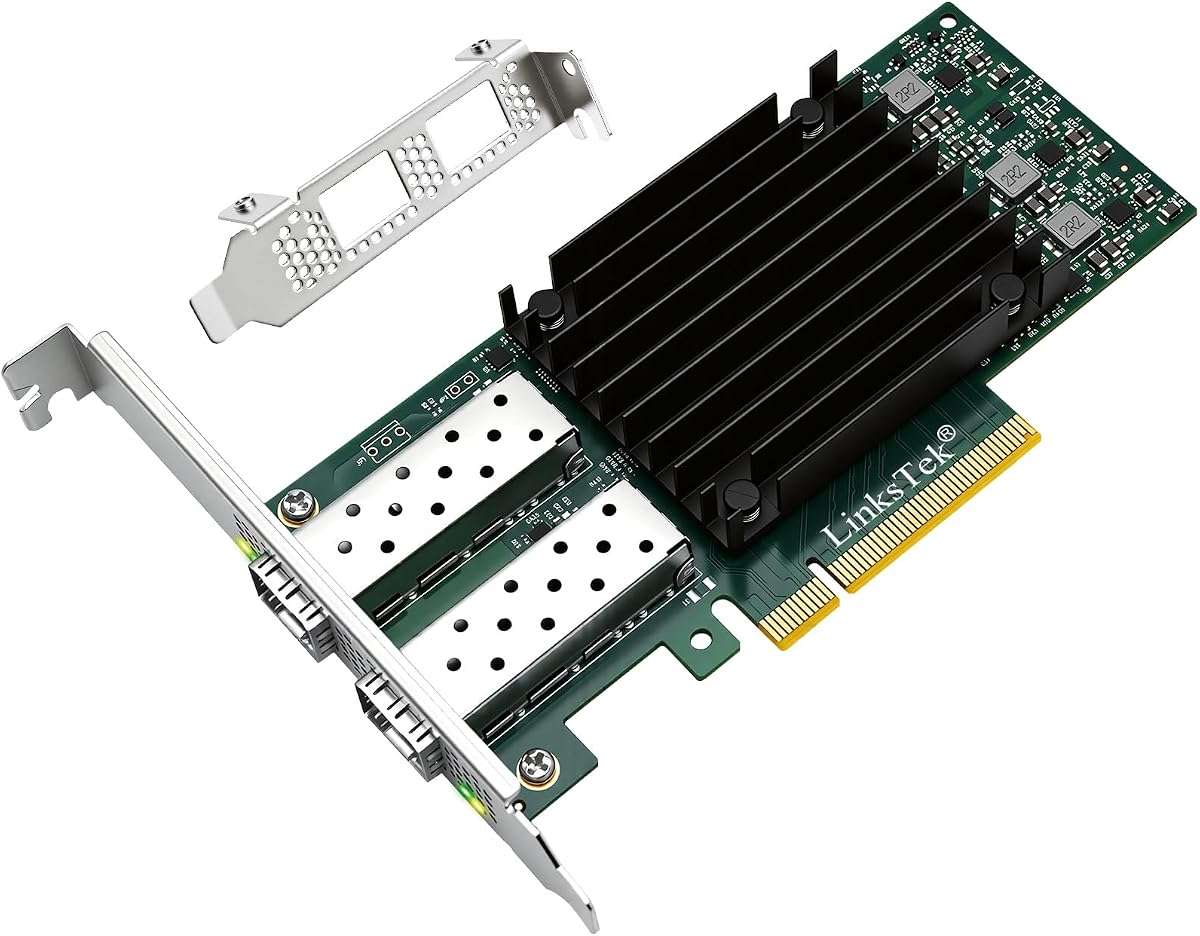


This Intel adapter stands out as the top choice for professionals seeking reliable high-speed connectivity. With a perfect user rating and robust specifications, it delivers consistent performance across diverse server environments.
We may earn a commission when you buy through this link, at no additional cost to you.
Its intelligent offloads and Flow Director capabilities ensure efficient traffic steering. The support for VXLAN, GENEVE, and NVGRE makes it ideal for modern network virtualization and cloud deployment scenarios.
While it may be harder to find in certain markets, its performance justifies the effort. Users appreciate the seamless integration with Xeon processors and the optimization for packet processing tasks.
We recommend this card for anyone prioritizing stability and advanced features. It remains a benchmark for 25GbE adapters in both virtualized and physical server setups.
The adapter supports SR-IOV and advanced offloads to reduce host CPU load during network operations.
DPDK optimization enables high throughput even with small packet workloads typical in NFV environments.
We may earn a commission when you buy through this link, at no additional cost to you.
The QXG-25G2SF-E810 is designed for enterprise environments that demand reliability and speed. Its Intel E810 controller ensures stable connections even under heavy network loads.
We may earn a commission when you buy through this link, at no additional cost to you.
A standout feature is the Forward Error Correction technology that enhances data integrity. This is critical for applications where data corruption cannot be tolerated during transmission.
Port trunking allows combining both ports to reach up to 50Gbps aggregate bandwidth. This flexibility is valuable for accelerating file sharing and intensive data transfer tasks.
Ideal for QNAP users and Linux or Windows servers, this card includes necessary brackets. It offers a solid foundation for upgrading legacy networks to 25GbE standards.
Forward Error Correction ensures reliable transfers without requiring retransmissions due to minor errors.
The adapter allows users to connect to multiple high-speed networking devices simultaneously.
We may earn a commission when you buy through this link, at no additional cost to you.
Offering exceptional value, this Vogzone adapter brings Mellanox performance at a fraction of the cost. It is a top pick for users seeking high bandwidth without breaking the budget.
We may earn a commission when you buy through this link, at no additional cost to you.
The ConnectX-4 Lx controller provides hardware-based I/O isolation and unmatched scalability. This is particularly useful for cloud, data analytics, and storage platforms requiring efficiency.
Users have rated this product highly due to its reliability and extensive feature set. It supports DPDK, iSCSI, and various virtualization technologies right out of the box.
We suggest this card for budget-conscious buyers who still need enterprise features. Its broad OS support ensures it works well in mixed environments.
This card delivers true hardware-based I/O isolation at a very competitive price point.
Supported systems include Windows, Linux, FreeBSD, and various enterprise distributions.
We may earn a commission when you buy through this link, at no additional cost to you.
Designed specifically for Synology NAS units, this adapter simplifies high-speed storage connectivity. It enables higher simultaneous throughput and better management of storage applications.
We may earn a commission when you buy through this link, at no additional cost to you.
Features like port failover and load balancing help maintain uptime and performance. These are essential for home labs or small businesses relying heavily on shared storage.
While user ratings are mixed, the integration with DSM makes it a plug-and-play experience. The five-year warranty adds peace of mind for long-term deployments.
We recommend this card only if you own a compatible Synology system. Its specialized design ensures seamless operation within the Synology ecosystem.
Configuration is handled directly through the Synology DSM interface for ease of use.
Port failover capabilities ensure network continuity if one connection drops.
We may earn a commission when you buy through this link, at no additional cost to you.
This 10Gtek card offers the speed of PCIe 4.0 with the reliability of the Intel E810 controller. Its perfect user rating highlights its effectiveness in real-world server and desktop scenarios.
We may earn a commission when you buy through this link, at no additional cost to you.
Support for RDMA and PXE makes it suitable for virtualized environments and bare-metal deployments. The dual SFP28 ports allow flexibility with fiber or DAC cabling options.
The compatibility with Windows, Linux, and VMware systems is impressive. Users can easily integrate this card into existing infrastructures without needing custom drivers.
We suggest this adapter for those building new systems with modern PCIe slots. It delivers excellent performance and versatility for a variety of networking tasks.
PCIe 4.0 x8 ensures maximum bandwidth utilization for future-proof network setups.
SR-IOV and DPDK capabilities allow efficient management of virtual machines.
We may earn a commission when you buy through this link, at no additional cost to you.
This CX4121A adapter combines powerful Mellanox connectivity with intelligent RDMA capabilities. Its high rating reflects reliability and ease of use in diverse server environments.
We may earn a commission when you buy through this link, at no additional cost to you.
With support for NVGRE and VXLAN, it handles complex overlay networks effortlessly. The RDMA over RoCE functionality reduces latency for storage and cluster applications.
Users appreciate its plug-and-play nature on Windows and Linux systems. The card supports various IEEE standards including energy-efficient Ethernet and jumbo frames.
We recommend this card for storage and virtualization servers needing low latency. It provides a balanced mix of performance and compatibility for professional setups.
Advanced features allow dynamic distribution of virtual I/O resources on demand.
Energy Efficient Ethernet standards help reduce power consumption during low activity.
We may earn a commission when you buy through this link, at no additional cost to you.
Designed for modern server racks, this GLOTRENDS adapter uses the OCP 3.0 mezzanine interface. It delivers stable 25GbE throughput with advanced traffic management capabilities.
We may earn a commission when you buy through this link, at no additional cost to you.
Features like Flexible Port Partitioning and QoS allow efficient resource allocation. This makes it suitable for cloud, NFV workloads where traffic prioritization is key.
The Intel E810 controller supports SR-IOV and iWARP/RDMA for virtualization and storage. It ensures compatibility with major operating systems including Linux and Windows Server.
We suggest this card for server builders needing an OCP-compliant solution. Its feature set aligns well with scalable data center requirements.
On-chip QoS helps prioritize critical traffic for improved application performance.
SR-IOV enables multiple virtual machines to share a single physical NIC efficiently.
We may earn a commission when you buy through this link, at no additional cost to you.
The Sonnet Twin25G T5 brings 25GbE speeds to laptops and workstations via Thunderbolt 5. It is a perfect premium solution for professional media workflows requiring fast shared storage.
We may earn a commission when you buy through this link, at no additional cost to you.
Included optical transceivers mean you can deploy on compatible fiber networks immediately. The dual ports ensure full bandwidth utilization without sacrificing local peripheral connections.
With a perfect rating, users praise its ease of use and seamless integration with macOS. It supports existing 10GbE infrastructure while providing a clear path to 25GbE.
We recommend this adapter for Mac professionals and studios. It removes the need for internal installation and delivers unmatched speed for creative applications.
High speeds enable real-time editing on shared storage and AI workflows.
Compatible with Thunderbolt 5 and 4 ports for maximum flexibility across devices.
We may earn a commission when you buy through this link, at no additional cost to you.
This Sonnet card adds dual optical 25GbE connections to any computer with PCIe slots. It is an effective upgrade for desktops needing high-speed fiber network access.
We may earn a commission when you buy through this link, at no additional cost to you.
The included transceivers ensure immediate deployment without additional purchases. Its backward compatibility with 10GbE allows for smooth transitions during infrastructure upgrades.
While compatibility issues exist with the latest macOS versions, it works well with most systems. It is particularly useful for those using Thunderbolt expansion systems.
We suggest this card for desktops with available PCIe slots. It provides a reliable and straightforward way to enhance network speeds.
Backward compatibility allows integration with existing 10GbE switches and storage.
Can be used in Thunderbolt expansion systems to add network capabilities to laptops.
We may earn a commission when you buy through this link, at no additional cost to you.
The ConnectX-5 EN adapter delivers intelligent RDMA capabilities for cloud and storage platforms. It is a solid choice for environments requiring advanced application offloads.
We may earn a commission when you buy through this link, at no additional cost to you.
Its dual-port SFP28 design ensures flexible connectivity options. The PCIe3.0 X8 interface provides sufficient bandwidth for most high-performance computing tasks.
Users appreciate its optimization for Telco and Web 2.0 workloads. The card ensures efficient data transfer with advanced virtualization support.
We recommend this card for professionals building high-performance networks. It offers a balance of speed and reliability for demanding enterprise environments.
Application offloads reduce host CPU usage for critical network functions.
Optimized for Web, storage, and Telco platforms with broad OS support.
We may earn a commission when you buy through this link, at no additional cost to you.
Selecting the right 25GbE network card depends on your specific hardware, operating system, and performance needs. This section outlines key factors to consider before purchasing.
The network controller defines speed and efficiency. Intel E810 and Mellanox ConnectX-4 or 5 offer robust performance and offloading capabilities.
Choose a controller that matches your virtualization and RDMA needs for best results.
Dual port cards provide redundancy and higher aggregate bandwidth. Ensure the physical connectors match your cabling, SFP28 for fiber or DAC.
Look for auto-negotiation features to support 10GbE fallback if needed.
Check if your slot is PCIe 3.0 or 4.0. Newer cards may offer better performance on PCIe 4.0 but often work on older slots.
Ensure the card fits your physical slot dimensions and supports your motherboard's lane width.
Verify drivers exist for your current OS version. Windows, Linux, and FreeBSD are widely supported but specific versions may vary.
Server versions and virtualization platforms require verified driver compatibility for stability.
SR-IOV and DPDK support reduce CPU overhead in virtual environments. These features are essential for high-performance virtualized networks.
If you run VMs, ensure the card offloads network processing efficiently to the hardware.
RoCE and iWARP enable low-latency communication between servers. This is critical for storage clusters and high-performance computing.
Check if your switches and infrastructure support the same RDMA protocols as the card.
Full-height or low-profile brackets determine physical fit. Some cards come with OCP 3.0 mezzanine modules for rack servers.
Ensure the card fits inside your chassis and aligns with available expansion slots.
Some kits include optical modules or DAC cables for immediate use. Others require you to purchase them separately.
Verify what is included to avoid unexpected extra costs during setup.
Install the card in an available PCIe slot and secure it firmly. Ensure the bracket aligns with the chassis opening for proper grounding.
Download the latest drivers from the manufacturer website. Verify compatibility with your operating system version before installation to prevent conflicts.
Use high-quality fiber or DAC cables designed for 25GbE. Check cable integrity regularly to avoid connection drops during high-speed transfers.
A 25GbE network card provides significantly higher bandwidth compared to 10GbE, enabling faster data transfers. It reduces bottlenecks in virtualized environments and supports modern storage requirements.
Yes, you need SFP28 compatible DAC or fiber cables. Using cables rated for lower speeds may limit performance. Ensure your switches also support 25GbE connections.
Many 25GbE cards support auto-negotiation down to 10GbE. Check your specific model's specs to confirm compatibility with lower-speed switches.
RDMA allows direct memory access between servers without CPU involvement. This reduces latency and improves performance in clustered and storage environments.
No, PCIe 3.0 provides enough bandwidth for a single 25GbE port. However, PCIe 4.0 offers headroom for future upgrades or multiple high-speed ports.
Look for SR-IOV or DPDK features in the product description. These indicate the card can efficiently manage network traffic for virtual machines.
Yes, Thunderbolt and PCIe adapters exist for Mac systems. Check specific macOS version compatibility before purchasing to ensure driver support.
Many cards offer a one to three-year warranty. Some specialized adapters like Synology provide up to five years of coverage.
Whether you need budget performance or premium connectivity, this guide covers top options like Intel, Mellanox, and Sonnet adapters. Each offers unique benefits for different environments.
Prioritize controller features and OS compatibility when making your choice. Ensure the card fits your physical and software requirements before purchasing.
Always check current availability and details on retailer sites since specs may vary over time. A well-selected card will future-proof your networking setup for years.