
200AH Lead Acid Battery Desulfator 12-48V Auto Pulse Desulfator 2A Battery Regenerator Extending Battery Life
4.4Editor score
Auto pulse technology
12V to 48V compatible
Extends battery life significantly
Supports up to 200AH
This guide compares the top 10 battery restorer and desulfator solutions to help you choose the right liquid additive or pulse device for your lead acid
Lead acid batteries degrade over time due to sulfation, but quality restorers can reverse this damage. A good desulfator either uses chemical additives to dissolve crystals or electronic pulses to break them down, restoring capacity and extending life without expensive replacement costs.
We evaluated ten top-rated products based on compatibility, ease of use, safety features, and user feedback. Our analysis covers both liquid solutions for flooded cells and electronic devices for broader battery types, ensuring you find the right tool for your vehicle or storage system.
Each product entry highlights key specifications, pros, cons, and real-world performance expectations. Please note that prices and availability change frequently on Amazon, so verify current details before making your final purchasing decision for your specific battery needs.
4.4Editor score

3.8Editor score

4.1Editor score
This comparison table outlines the key specifications and capabilities of the top ten battery restorer and desulfator products available this month.



This 64oz liquid restorer stands out as a top choice for reviving lead acid batteries in cars and golf carts. With a rating of 3.8 stars, users appreciate its ability to break down sulfation and boost capacity without complex tools.
We may earn a commission when you buy through this link, at no additional cost to you.
It acts as a gentle acid refill additive that penetrates cells to improve chemical balance. Many report extended battery life and reliable performance after using this affordable solution instead of buying new batteries.
While effective on flooded cells, it requires a healthy battery that still accepts a charge. Users must follow dosage instructions carefully to avoid overfilling or diluting electrolytes beyond safe limits.
Anyone managing fleets or personal vehicles with lead acid batteries will find this cost-effective additive valuable. It is recommended for regular maintenance to prevent sulfation buildup from becoming permanent damage.
The formula penetrates cells to dissolve hardened lead sulfate crystals blocking electrical flow and restoring full capacity.
Unlike harsh chemicals, this additive protects internal components from damage while improving performance during the restoration cycle.
We may earn a commission when you buy through this link, at no additional cost to you.
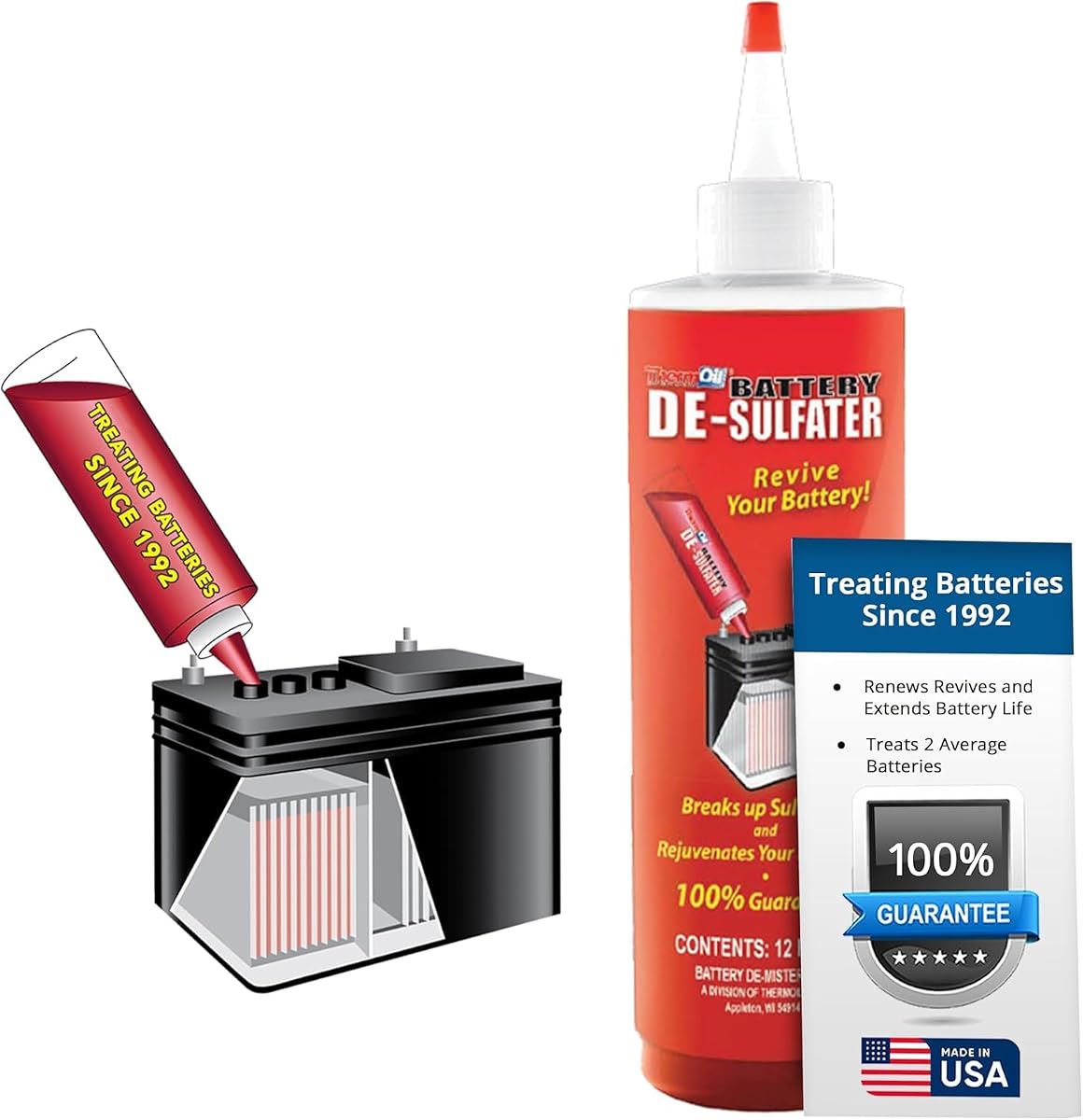
This 64oz battery care solution offers peace of mind with a 100 percent guarantee on performance for mechanically sound lead acid batteries. Users note its non-acid formula is safe and effective at reducing internal resistance.
We may earn a commission when you buy through this link, at no additional cost to you.
The product works by breaking down sulfation corrosion on plates without using cheap Epsom salts. It enhances efficiency and extends lifespan, making it a reliable choice for golf carts and marine batteries needing regular care.
While it provides a guarantee, it only works on batteries that still accept a charge. The higher price might deter budget shoppers, but the safety and proven track record since 1992 justify the investment for many.
Ideal for those seeking a risk-free additive solution for maintenance, this product fits well in fleets or large battery banks. Ensure batteries are not frozen or dry before application for best outcomes.
Users report up to 50 percent elimination of resistance, improving power efficiency and reducing internal heating during operation.
Simply add as an electrolyte additive to your lead-acid battery and let it work its magic in breaking up sulfation.
We may earn a commission when you buy through this link, at no additional cost to you.
This professional desulfator device offers advanced pulse repair technology for a wide range of battery types including AGM and Gel. Rated 4.1 stars, it is ideal for systems up to 72V like solar or golf carts.
We may earn a commission when you buy through this link, at no additional cost to you.
By sending high-frequency pulses, it prevents and dissolves lead sulfate buildup over 2 to 4 weeks. It comes with robust safety features like reverse polarity protection and low-voltage cutoffs to ensure safe long-term operation.
While effective, users must allow enough time for the 30 cycles of intelligent desulfation to work fully. It is not a charger, so pairing with a standard charger cycle is necessary for optimal results.
Best suited for tech-savvy users managing complex battery banks, this unit delivers reliable maintenance for demanding applications. Its durability and compatibility make it a top choice for serious battery care.
This device sends advanced high-frequency low-current pulses that prevent and dissolve lead sulfate buildup effectively.
Compatible with 12V to 72V battery systems including AGM, Gel, VRLA, SLA, and Flooded types for broad utility.
We may earn a commission when you buy through this link, at no additional cost to you.
This 12oz version of the DeSulfater provides a convenient option for smaller battery maintenance needs. It maintains the same non-acid formula as the larger bottle, ensuring safety and effectiveness without Epsom salts.
We may earn a commission when you buy through this link, at no additional cost to you.
By breaking down sulfation corrosion, it enhances power efficiency and prevents damage from overcharging. It is particularly useful for single vehicle owners or those needing a small top-up supply for quick fixes.
The bottle size means multiple units may be needed for larger projects, increasing total cost. However, for casual users, the ease of use and guaranteed results make it a practical choice for home garages.
Ideal for maintaining individual cars or motorcycles, this solution offers a hassle-free way to extend battery life. Ensure you use the correct amount per cell to avoid dilution issues.
The non-hazardous formula ensures safe handling and application for all lead-acid batteries without harmful chemicals.
Users experience reduced internal heating and increased power efficiency after using this additive to restore battery health.
We may earn a commission when you buy through this link, at no additional cost to you.
This 1-gallon refill is designed for fleet owners or anyone managing multiple batteries at once. It treats 3 to 6 batteries cost-effectively and is made in the USA with a non-toxic formula for safety.
We may earn a commission when you buy through this link, at no additional cost to you.
The solution penetrates cells to dissolve lead sulfate crystals blocking electrical flow. Most customers see measurable improvement after 7 to 10 days of regular charging, restoring lost energy storage potential.
While great for volume, it is not compatible with sealed or dry cells. Users must ensure batteries are still accepting a charge before application. The non-toxic nature allows safe handling without protective gear.
Ideal for golf courses or marina operators, this product simplifies battery maintenance for large inventories. It is a practical choice for extending life across multiple units simultaneously.
One gallon is enough to treat a full 6-pack golf cart battery bank with solution to spare.
The formula chemically dissolves hardened lead sulfate crystals on plates to free them for higher charge delivery.
We may earn a commission when you buy through this link, at no additional cost to you.
This automatic pulse desulfator simplifies battery maintenance by using controlled charging cycles to rejuvenate cells. Rated 3.9 stars, it works with car, marine, and deep cycle batteries to dissolve sulfate crystal buildup.
We may earn a commission when you buy through this link, at no additional cost to you.
Its electronic pulses help revive and maintain performance without constant user intervention. The simple connection process makes it easy to install for continuous maintenance and reconditioning in garages.
While it offers hands-free operation, performance can vary based on battery age and condition. Users should monitor progress and ensure proper connections to avoid issues during long-term use.
Ideal for owners of multiple vehicles who need automated maintenance, this tool extends life effectively. It is a reliable addition to any battery care routine.
Features pulse technology that automatically reconditions lead-acid batteries through controlled charging cycles.
Works with various types of lead-acid batteries including car, marine, RV, and deep cycle batteries.
We may earn a commission when you buy through this link, at no additional cost to you.
This gallon-sized solution is tailored for fleets and professionals needing to maintain multiple batteries. It breaks down harmful lead sulfate buildup on plates and restores charging capacity in flooded lead acid batteries.
We may earn a commission when you buy through this link, at no additional cost to you.
Made in the USA, it offers high quality standards for golf carts and marine batteries. Users must allow up to 10 days of regular charging for full effect to see significant improvements.
While effective on serviceable batteries, it cannot revive completely dead or damaged cells. It is designed as a maintenance tool to extend life rather than fix catastrophic failures.
Best for seasonal care at start of golf season, this product helps avoid costly replacements. Ensure batteries are in working condition before applying for best results.
Designed to help serviceable lead-acid batteries last longer with regular maintenance use rather than fixing dead cells.
The solution breaks down harmful lead sulfate buildup on battery plates to restore charging capacity effectively.
We may earn a commission when you buy through this link, at no additional cost to you.
This maintainer offers auto-setting capabilities for a wide range of lead acid batteries up to 400AH. Rated 4.0 stars, it uses high-frequency peak pulses to prevent sulfate crystals from sticking to electrodes.
We may earn a commission when you buy through this link, at no additional cost to you.
It automatically recognizes battery voltage, simplifying the setup process for users. However, the battery voltage must be above 11.5V before use; otherwise, charging is required first to ensure proper operation.
Performance improvements typically appear after 2 to 3 weeks of consistent use. The device can be used alongside a standard charger to maintain performance during charging cycles.
Ideal for large capacity batteries, this unit provides a reliable way to keep electrodes in a near-new state. Follow voltage checks carefully for successful revival and maintenance.
Adopts high-frequency peak pulse to prevent lead sulfate crystals from sticking to the electrode and gradually decomposes them.
Once connected, the battery voltage will be recognized automatically without manual setting for convenience.
We may earn a commission when you buy through this link, at no additional cost to you.
This refill solution offers a cost-effective way to renew battery energy for golf carts and other vehicles. Rated 4.2 stars, it breaks down sulfide layers and cleans deposits to restore normal discharge performance.
We may earn a commission when you buy through this link, at no additional cost to you.
Versatile for motorcycles, trucks, and boats, it requires only 1 to 2 hours to recharge after use to improve capacity. Users can keep the original liquid and simply add the full amount for best results.
Note that this product cannot be used on frozen or physically damaged cells. It is designed for batteries that can still be recharged but are holding less charge than expected.
Ideal for budget-conscious owners needing a quick refresh, this fluid helps maintain stable performance. Follow usage notes to avoid misuse on incompatible battery types.
The renew solution breaks down the sulfide layer, cleans up other deposits, and restores battery characteristics.
Suitable for motorcycles, trucks, airplanes, boats, snowmobiles, and other lead-acid battery users.
We may earn a commission when you buy through this link, at no additional cost to you.
This budget-friendly device offers solid performance for lead acid batteries up to 200AH. Rated 4.4 stars, it uses auto pulse technology to prevent sulfate crystals from sticking and extending battery life effectively.
We may earn a commission when you buy through this link, at no additional cost to you.
Its compatibility with AGM and SLA types adds flexibility beyond just flooded batteries. The device automatically recognizes voltage, simplifying connection for most users needing a reliable regenerator.
While affordable, it works best on batteries that still hold some charge. Ensure voltage is above 11.5V before use, and allow 2 to 3 weeks for full performance benefits to appear.
Ideal for budget-conscious buyers, this tool offers a strong balance of price and performance. It is a smart choice for extending life on older batteries without spending heavily.
Uses high-frequency peak pulse to prevent lead sulfate crystals from sticking to the electrode and gradually decomposes them.
Once connected, the battery voltage will be recognized automatically without manual setting for user convenience.
We may earn a commission when you buy through this link, at no additional cost to you.
Selecting the right restoration tool depends on your battery type, voltage, and whether you prefer a chemical or electronic solution.
Different restorers support different chemistries. Liquid additives generally work only on flooded lead acid batteries, while pulse devices may handle AGM, Gel, or VRLA. Verify your battery type to avoid voiding warranties or causing damage.
Always check the product specs for specific compatibility claims before purchasing.
If you have multi-cell systems like golf carts or solar banks, ensure the device supports your total voltage. Many pulse units range from 12V to 48V or 72V, while liquids are voltage-neutral but cell-specific.
Match the product voltage range to your system to ensure proper operation and safety.
Chemical additives dissolve sulfation inside cells and are great for flooded batteries needing a boost. Devices use electronic pulses and are better for maintenance across various types without opening cells.
Choose based on whether you prefer a chemical fix or an electronic solution for your specific needs.
Pulse desulfators often list maximum amp-hour (AH) support. Select a device that matches your battery's AH rating to ensure it can deliver sufficient current for desulfation.
Check the AH limit to avoid underpowered recovery for larger batteries.
Look for built-in protections like reverse polarity, overcharge cutoff, and fuses. These ensure the tool won't damage your battery or pose hazards during extended use.
Prioritize products with robust safety certifications for peace of mind.
Some brands offer guarantees on effectiveness. A clear policy indicates confidence in the product and offers recourse if the results don't meet expectations.
Check return policies and warranty terms before committing to a purchase.
Consider setup time and maintenance requirements. Some devices are plug-and-play, while liquids require precise measuring. Choose what fits your skill level and maintenance frequency.
Simpler tools reduce error risks and save time.
For liquid additives, ensure your battery is clean and vent caps are accessible. Measure the exact dose per cell as directed and add it carefully without overfilling, then run a full charge cycle to activate the formula.
For pulse devices, connect red to positive and black to negative terminals, ensuring voltage is above 11.5V. Let the unit run for weeks, often alongside a charger, to allow pulses to dissolve sulfation gradually.
Regular maintenance is key to long-term success. Monitor voltage and charge levels frequently, and reapply or recharge as needed to prevent sulfation from building up again over time.
A battery restorer is a chemical additive or electronic device designed to reverse sulfation in lead acid batteries. It helps dissolve lead sulfate crystals that block electrical flow, allowing the battery to hold a charge longer.
Not all desulfators work on every type. Liquid additives generally only work on flooded lead acid batteries. Electronic pulse devices may support AGM or Gel batteries, so always check compatibility.
Most restorers cannot revive a completely dead or dry battery. They work best on batteries that still accept a charge but are weakened. If the battery is frozen or damaged, replacement is usually required.
Results vary, but most products show improvements within 7 to 10 days for liquids and 2 to 4 weeks for pulse devices. Patience is key as the desulfation process is gradual.
Many additives are non-toxic and safe to handle without gloves. However, always follow safety instructions and wear eye protection when dealing with battery acids or chemicals.
Some manufacturers may void warranties if additives are used. Check your battery warranty terms and prefer pulse devices if you want to avoid opening the battery cells.
We highlighted top picks like the 200AH automatic desulfator and the 64oz liquid restorer for different needs. These products offer reliable ways to extend battery life across vehicles and storage systems.
Prioritize compatibility with your battery type and voltage when selecting. Ensure the tool fits your specific use case for best results and safety.
Remember that prices and availability fluctuate, so always check current details on Amazon before purchasing your ideal restoration tool.