
Air Quality Monitor Indoor, 10-in 1 Smart Air Quality Tester
5.0Editor score
Ten-in-one sensor technology
HD LED color screen display
Up to 20 hours runtime
Monitoring indoor air quality is essential for maintaining a healthy home environment. Modern devices track pollutants like PM2.5, VOCs, and CO2 to ensure safe breathing conditions for your family.
We evaluated ten top-rated models based on sensor accuracy, display clarity, battery life, and smart home integration. Each product was assessed for ease of use and real-time data reliability.
Each pick highlights key strengths and ideal use cases for different households. Note that product availability and specifications may vary by retailer, so check current listings before purchasing.
5.0Editor score
4.0Editor score

4.0Editor score
As an Amazon Associate we earn from qualifying purchases.
The following table provides a side-by-side overview of the leading indoor air quality monitors available this month. Compare their sensor capabilities, display types, and connectivity options to identify the best fit for your specific needs.



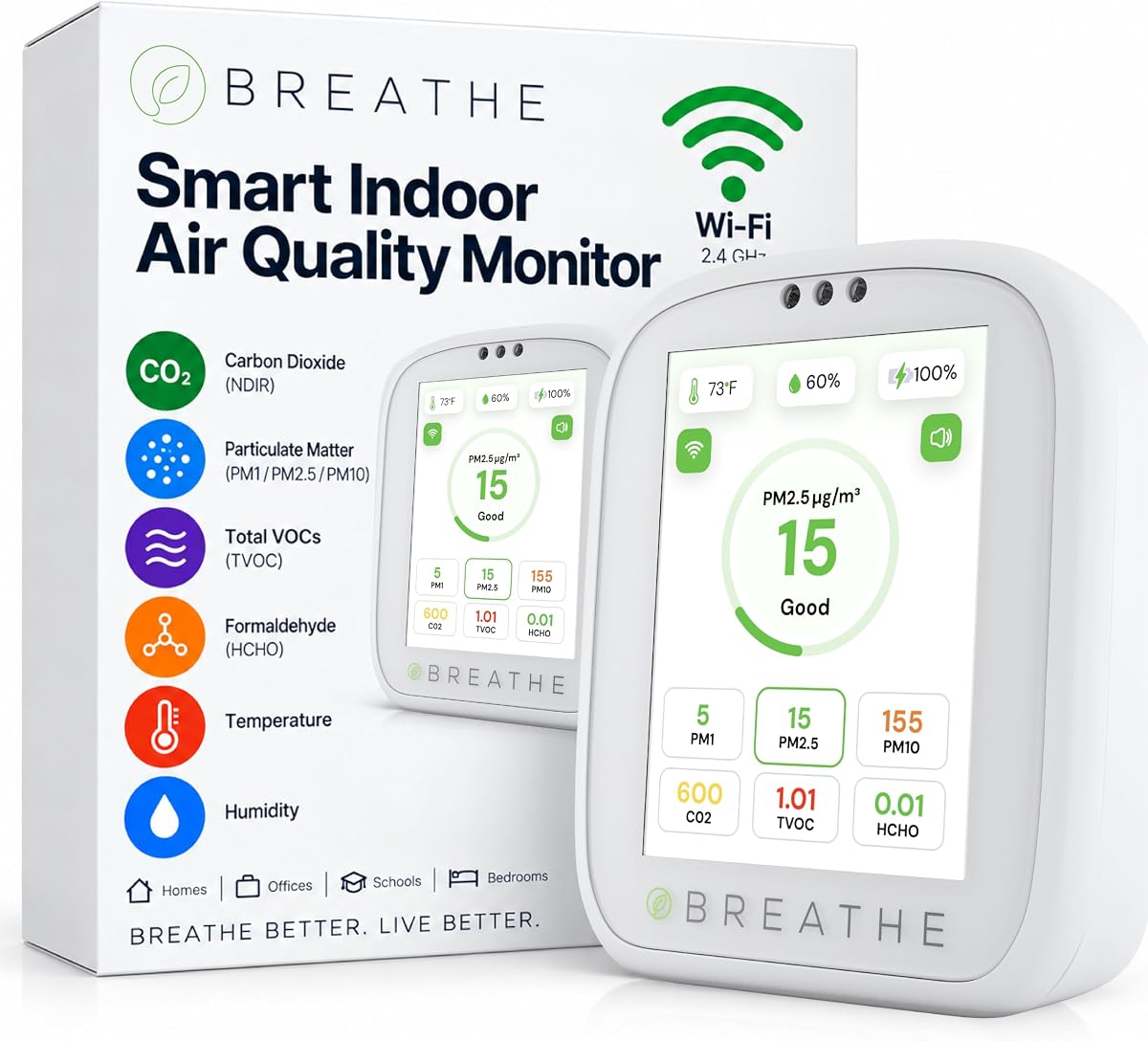
The BREATHE Airmonitor Plus stands out as a top contender for comprehensive home monitoring with its professional-grade sensors and smart connectivity. It earned strong marks for its ability to track multiple pollutants simultaneously without needing extra devices.
We may earn a commission when you buy through this link, at no additional cost to you.
Its precision NDIR CO2 measurement paired with laser particle sensing provides detailed insights into what you are breathing. The free app offers configurable alerts and historical graphs, making it easy to spot trends over time.
While the battery life is solid for portable use, it may require frequent charging if you plan on moving it room to room daily. However, the ability to plug it into USB-C power for continuous operation mitigates this trade-off.
This monitor is ideal for homeowners who want deep data analysis alongside easy setup. If you prioritize understanding how cooking or occupancy affects your air, this model offers the best balance of accuracy and usability.
The device combines NDIR CO2, laser particle, and dedicated TVOC sensors to deliver a full picture of indoor air health.
Store up to 90 days of readings and export them for deeper analysis of long-term air quality patterns.
We may earn a commission when you buy through this link, at no additional cost to you.
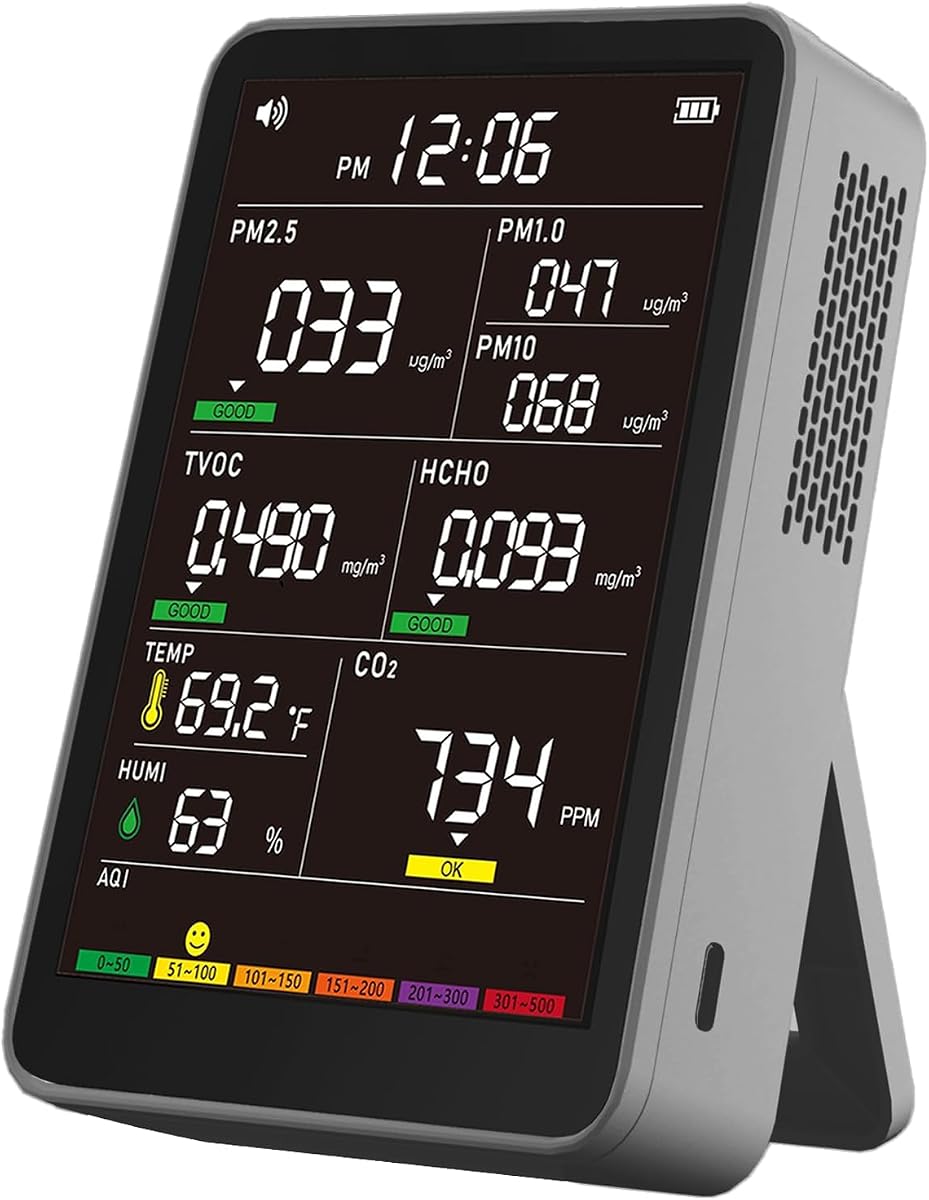
This portable intelligent air quality tester offers exceptional value by packing ten monitoring functions into an affordable package. It received perfect scores for its ease of use and clear visual feedback system.
We may earn a commission when you buy through this link, at no additional cost to you.
The high-definition color screen intelligently changes color when thresholds are exceeded, allowing you to grasp risks at a glance. Its smart calibration ensures stable sensitivity without requiring frequent manual adjustments.
The main limitation is the lack of Wi-Fi or smart home features, meaning alerts only appear on the device itself. For those who prefer simplicity and portability over remote notifications, this is an acceptable trade-off.
Ideal for renters or families who want quick checks in multiple rooms without complex setup. Its long battery life and compact build make it perfect for travel or moving between the bedroom and living room.
The monitor automatically generates environmental quality reports and uses color cues to highlight abnormal data instantly.
A built-in 2000mAh battery supports up to twenty hours of continuous detection on a single charge.
We may earn a commission when you buy through this link, at no additional cost to you.
The Airthings View Plus is a unique premium option because it includes radon gas detection alongside standard air quality metrics. It is designed for long-term, always-on monitoring in a cable-free form factor.
We may earn a commission when you buy through this link, at no additional cost to you.
Its battery-powered design allows for flexible placement anywhere in your home without worrying about outlets. The app provides timely notifications and tips to improve your air, including local pollen forecasts.
While the price is higher than average, the radon detection adds significant value for safety-conscious buyers. The five-year warranty option further protects your investment in long-term health monitoring.
This model is best suited for homeowners looking for comprehensive health data including radon levels. If you want a set-and-forget solution that works without wires, this premium choice delivers reliable results.
As the number one cause of lung cancer among non-smokers, radon monitoring is a critical feature included in this device.
The device runs on batteries, allowing you to place it on a shelf or table anywhere without needing power cables.
We may earn a commission when you buy through this link, at no additional cost to you.
For households already invested in the Amazon ecosystem, this monitor integrates effortlessly with Echo devices and the Alexa app. It simplifies air quality tracking by announcing changes directly through your speakers.
We may earn a commission when you buy through this link, at no additional cost to you.
The ability to automate routines, such as turning on an air purifier when quality drops, adds practical utility. Its compact design and simple setup make it accessible for users who want immediate results without technical hurdles.
It lacks a built-in battery, meaning it must stay near an outlet, which can limit placement flexibility. Additionally, while it covers essential factors, the sensor precision may not match specialized professional units.
This is an excellent choice for those who prioritize convenience and smart home automation. If you want a device that talks to your existing Alexa gadgets to manage your environment, this is the top pick.
Enable Routines to turn on compatible devices like air purifiers when indoor air quality sensors detect changes.
Unlike many other consumer monitors, this unit tracks carbon monoxide alongside PM2.5 and VOCs for broader safety.
We may earn a commission when you buy through this link, at no additional cost to you.
This all-in-one air quality meter tests multiple parameters simultaneously, offering full-spectrum indoor air data. It is designed for flexible placement and handheld use in various indoor spaces like offices and cars.
We may earn a commission when you buy through this link, at no additional cost to you.
The high-precision sensor array updates data every 1.5 seconds, ensuring continuous real-time feedback. The HD color screen enhances readability with color-coded levels, making it easy to interpret data quickly.
Its battery life is moderate, requiring frequent charging for continuous use, but the Type-C port makes topping up convenient. It is important to note this is a reference device and not a certified life-safety alarm.
This model is ideal for users who want to move the monitor between rooms or vehicles easily. If you need a versatile tool for checking different environments without investing in multiple devices, this is a strong option.
Portable and lightweight for checking air parameters in indoor rooms, vehicles, bedrooms, and campsites.
The sensor array automatically samples and processes air data every 1.5 seconds for timely ventilation adjustments.
We may earn a commission when you buy through this link, at no additional cost to you.
This monitor offers a crystal-clear 7-inch LED display that provides an instant view of your indoor air quality without navigation menus. It is designed to deliver unmatched accuracy through external high-precision sensors.
We may earn a commission when you buy through this link, at no additional cost to you.
The device samples air directly with an enhanced airflow design, detecting even slight environmental changes. Its distinct alert buzzers ensure you stay informed about pollutants like CO2 and PM2.5 with clear audible cues.
Users should avoid touching the sensors or exposing them to strong odors to maintain accuracy. The physical size might make it less portable than handheld models, but the display quality is superior.
This is a great choice for stationary monitoring in offices or living spaces where visibility is key. If you want a device that displays clear, sharp data on a large screen, this model excels.
Enjoy a 7-inch LED display for sharp, clear air quality readings with three brightness settings.
Seven distinct alert buzzers ensure you are notified about changes in CO2, PM2.5, and other key pollutants.
We may earn a commission when you buy through this link, at no additional cost to you.
The GoveeLife H5106 is designed specifically for users with other Govee smart appliances like air purifiers or humidifiers. It measures essential indexes including PM2.5, temperature, and humidity with high accuracy.
We may earn a commission when you buy through this link, at no additional cost to you.
You can link it with your other GoveeHome smart appliances to automate their operation based on air quality changes. The free data storage allows you to export readings over the past two years for long-term tracking.
Since it does not have a built-in battery, it must remain connected to a power source, limiting mobility. Additionally, it tracks fewer parameters compared to multi-sensor models, focusing on core metrics.
This is the ideal choice if you already use Govee smart home devices and want unified automation. If you prefer a simple, reliable device that talks to your existing ecosystem, this model fits perfectly.
Link with GoveeLife air purifiers and humidifiers to turn on and off automatically when indoor air quality changes.
Enjoy remote monitoring with online viewing of 13-day data graphs and exporting data over the past two years.
We may earn a commission when you buy through this link, at no additional cost to you.
This monitor features a spacious 5.5-inch HD LED display with crisp, easy-to-read air quality data at a glance. It is designed to provide comprehensive indoor air information without navigating through complex menus.
We may earn a commission when you buy through this link, at no additional cost to you.
Its runtime extends up to ten hours, which is impressive for a portable unit, allowing it to cover a full workday. The real-time alerts ensure you are always informed about pollutants like CO2 and VOCs.
Users should be aware that the alerts might be audible, so a mute button is provided for quiet environments. While the high precision is beneficial, care must be taken to avoid exposing sensors to strong odors.
This model is perfect for home offices where long battery life and clear visibility are priorities. If you need a reliable monitor that keeps you informed throughout your workday, this device delivers consistent performance.
Enjoy up to 10 hours of continuous air quality monitoring on a full charge for long sessions.
Real-time monitoring and alerts with 7 distinct alert functions ensure you stay informed clearly.
We may earn a commission when you buy through this link, at no additional cost to you.
This 2-pack bundle offers a practical way to monitor multiple rooms in your home simultaneously. It provides the same Alexa integration features as the single unit but doubles your coverage for better whole-home awareness.
We may earn a commission when you buy through this link, at no additional cost to you.
You can enable routines for both devices to automate climate control across different zones. Each unit operates independently, allowing you to set specific alerts for bedrooms versus living spaces.
Since each monitor requires a power outlet, you will need to ensure you have two available sockets. This might limit placement in rooms with limited power access, but the convenience of coverage is significant.
This bundle is best for families wanting comprehensive monitoring without buying separate devices. If you need to track air quality in two primary zones, this value pack simplifies the process effectively.
The information below is per-pack only, allowing you to monitor two distinct areas independently.
Enable Routines to turn on or off compatible Alexa devices when the sensors detect changes in each room.
We may earn a commission when you buy through this link, at no additional cost to you.
This all-in-one air quality meter covers seven core ambient indicators, delivering full-spectrum data for timely adjustments. It is designed to eliminate the need for multiple single-function testers by combining their capabilities into one device.
We may earn a commission when you buy through this link, at no additional cost to you.
The high-precision sensor array samples data every 1.5 seconds for continuous updates. Its simple setup fits elderly users perfectly, and the adjustable audio prompts allow you to control sound distractions.
The battery life is limited to 4-5 hours, meaning it may need frequent charging for extended trips. It is strictly a reference tool for monitoring and should not be relied upon as a life-safety alarm.
This is ideal for users who want a single device to track many parameters like PM2.5, HCHO, and TVOC. If you need detailed environmental data for a car or bedroom without multiple gadgets, this tester excels.
One button controls power on/off and unit switching; double tap to turn off the built-in audio prompt.
Simultaneously tests PM1.0, PM2.5, PM10, TVOC, HCHO, temperature and humidity to cover core needs.
We may earn a commission when you buy through this link, at no additional cost to you.
Selecting the right indoor air quality monitor depends on your specific needs, budget, and desired features. Below are the key factors to consider before making a purchase.
Look for monitors that use high-precision sensors like NDIR for CO2 and laser scattering for particulate matter. Accurate sensors ensure you are getting reliable data rather than estimated readings.
Prioritize devices with advanced sensor arrays if you need to track specific pollutants like formaldehyde or VOCs precisely.
Decide if you need a simple device measuring just PM2.5 and humidity or a comprehensive 16-in-1 tester. Multi-parameter monitors provide a fuller picture of your air but may be pricier.
Choose a model that measures the specific pollutants relevant to your environment, such as radon or CO2 for safety.
A clear display like a large LCD or color screen allows you to see readings without navigating complex menus. Brightness adjustments and color-coded alerts can make interpreting data easier.
Ensure the display is large enough for your needs, especially if you are monitoring in a shared space like a living room.
Wi-Fi enabled models allow you to access data remotely and set up smart home automations. If you use Alexa or other ecosystems, compatibility is key for voice control.
Consider if you want app notifications on your phone or if local alerts on the device are sufficient for your needs.
Battery-powered units offer flexibility in placement but require charging or battery replacement. Plugged-in models provide continuous power but limit where you can position the device.
Check the runtime on a single charge to ensure it fits your daily usage patterns without needing constant attention.
Advanced monitors store historical data, allowing you to track trends over time. Export options help you analyze patterns for deeper insights into your air quality habits.
Select a device that offers enough storage history to suit your analysis needs without requiring a subscription.
Audible and visual alerts keep you informed when air quality drops below safe levels. Customizable thresholds let you set alerts based on your personal preferences.
Ensure the alert system is effective but not overly intrusive, especially for bedroom use where quiet is essential.
Be aware that most consumer monitors are reference tools and not certified life-safety devices like smoke or CO alarms. Do not rely on them for critical safety warnings.
Look for devices that clearly state their limitations and intended use to avoid confusion about their capabilities.
To ensure accurate readings, place the monitor on a flat surface away from direct airflow or heat sources. Avoid touching the sensors directly with your hands or exposing them to perfumes and strong odors.
Regularly clean the exterior casing and sensor vents with a soft, dry cloth to prevent dust buildup. This maintenance helps the device maintain its precision and longevity over time.
Keep the device firmware updated if it connects via Wi-Fi to ensure you have the latest features. If using a battery-powered model, charge it fully before storage to prevent battery degradation.
Yes, many modern monitors use high-precision sensors that provide reliable data for home environments. While they may not match laboratory-grade equipment, they are sufficient for tracking trends and general air health. Always look for models with clear accuracy ratings.
Wi-Fi connectivity is optional but useful if you want remote access or smart home integration. For basic local monitoring, a standard model without Wi-Fi is often more affordable and simpler to use.
For general monitoring, leave the device in a central location where you spend most of your time. If you want to track changes, move it between rooms periodically to compare air quality across spaces.
Most monitors do not detect CO, but some specific models do. Always check the product specifications to confirm if it tracks CO before relying on it for that safety feature.
It depends on whether you need to track multiple pollutants like formaldehyde and TVOC. If you only care about PM2.5 and humidity, a simpler model may be more cost-effective.
Use a soft brush or dry cloth to gently remove dust from the sensor vents. Avoid using liquids or chemicals as they can damage the sensitive components inside the device.
The BREATHE Airmonitor Plus leads our list for its comprehensive tracking and smart app features. The 10-in-1 tester offers excellent value for those on a budget, while the Airthings View Plus stands out for radon detection.
Prioritize accuracy and sensor type over extra features if your main goal is reliable health monitoring. Ensure the device you choose tracks the specific pollutants most relevant to your household.
Remember to check current listings for the most up-to-date availability and features before buying. Air quality technology advances quickly, so verifying specifications helps you make the best decision.