
AGFRC 20A BLHeli_S
4.3Editor score
Compact lightweight design
Damped light feature
Multiple protocol support
This guide compares the top Escs for Racing Quadcopter builds, reviewing performance, features, and value to help you choose the right speed controller.
Selecting the right electronic speed controller is critical for any racing quadcopter build. A high quality Esc ensures smooth throttle response, efficient power delivery, and reliable motor control during intense flights.
We evaluated ten top rated Escs based on firmware support, current handling, and build quality. Our analysis focuses on real world performance metrics and compatibility with popular flight controllers.
Each pick highlights key strengths and trade offs for different budgets and skill levels. Prices and availability can change quickly so verify current listings before making your final purchase decision.
4.3Editor score
4.4Editor score

The following table provides a side by side overview of all ten Escs analyzed in this guide. Compare specifications, features, and ratings to find the model that matches your specific racing or freestyle needs.




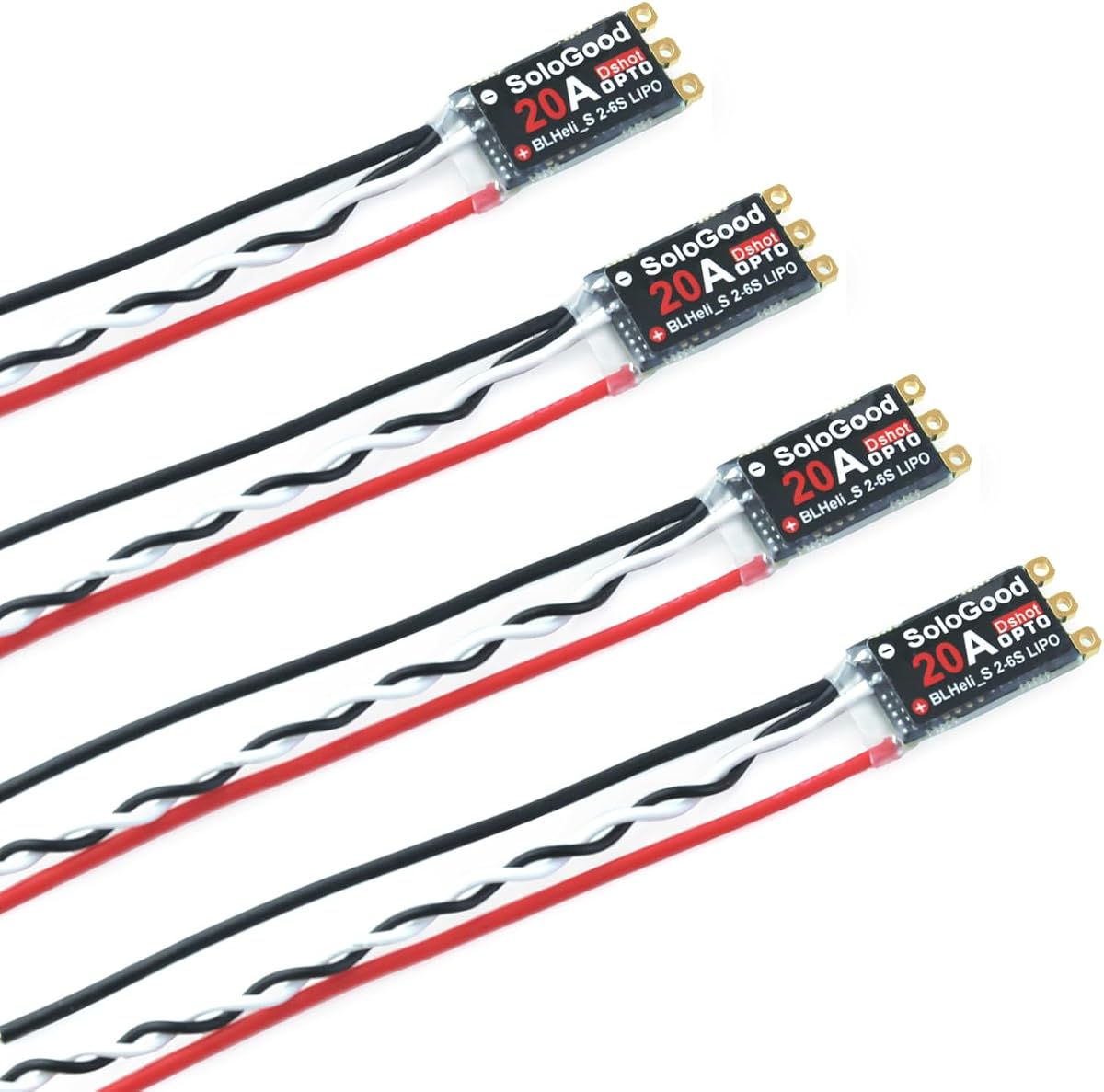
This 20A ESC stands out as a reliable choice for FPV drone enthusiasts seeking balanced performance. With a 4.4 rating and strong support for BLHeli_S firmware, it offers smooth throttle control and easy customization for racers.
We may earn a commission when you buy through this link, at no additional cost to you.
The twisted pair throttle signal cable minimizes crosstalk, ensuring clean data transmission during high speed flights. The use of original components guarantees stable current handling, which is critical for preventing power loss under load.
While it supports 2 to 4S batteries, it may not suit higher voltage builds. However, its optimization for multi-axis drones and fixed wing aircraft makes it highly adaptable for various project types beyond standard racing.
Buyers looking for a dependable ESC with simple update capabilities will find this set ideal. It delivers consistent performance for most freestyle and racing applications without compromising on build quality or signal integrity.
The twisted pair cable design significantly reduces interference, ensuring your throttle commands reach the motor accurately even during aggressive maneuvers.
BLHeli_S compatibility allows you to upgrade or flash firmware easily via the signal cable, keeping your setup current with the latest features.
We may earn a commission when you buy through this link, at no additional cost to you.
The LittleBee ESCs offer a compact solution for racing builds where space is at a premium. Rated at 20A continuous with 25A burst capability, they deliver smooth and precise control for high performance drones.
We may earn a commission when you buy through this link, at no additional cost to you.
These units come preloaded with BLHeli_S firmware, saving time on setup. The DShot protocol support ensures fast communication, while the muted mode reduces operational noise without sacrificing efficiency.
A 23x12x4mm footprint allows integration into tight frames without compromising stability. The stable power handling is particularly useful for maintaining performance during short bursts of high throttle required in racing scenarios.
For builders prioritizing size and weight without losing core functionality, these ESCs are a strong candidate. They provide the essentials for competitive flight with added convenience features like easy bootloader access.
The tiny footprint ensures the ESC fits neatly into even the smallest racing frames, preserving balance and center of gravity.
Muted mode technology allows for quieter flights which can be beneficial for flying in noise restricted areas or avoiding attention.
We may earn a commission when you buy through this link, at no additional cost to you.
This 60A ESC provides robust power delivery for larger racing frames. The 6S support and immersion gold design ensure durability against heat and high current loads typical of powerful racing setups.
We may earn a commission when you buy through this link, at no additional cost to you.
Direct plug-in pads for flight controllers eliminate soldering hassles, streamlining the build process. Support for DShot600/300/150 gives flexibility to match your flight controller preferences for digital communication.
While stable output is guaranteed, the M3 mounting size requires precise alignment. The gold plating improves resistance to temperature spikes, extending the life of the ESC during intense freestyle sessions.
Users needing higher power capacity than 20A units should consider this model. It balances modern connectivity options with the necessary heat resistance to handle demanding racing conditions effectively.
Immersion gold design on the PCB provides superior resistance to high temperatures, ensuring reliable performance under heavy load.
Large ESC pads and direct plug-in features reduce the need for excessive soldering, saving time and reducing build errors.
We may earn a commission when you buy through this link, at no additional cost to you.
With a perfect 5.0 rating, this ESC delivers exceptional quality for racing drones. Its adaptive default settings automatically adjust timing to fit most applications, simplifying setup for new builders.
We may earn a commission when you buy through this link, at no additional cost to you.
The signal frequency support above 600Hz ensures compatibility with a wide range of flight controllers. Crosstalk reduction features maintain signal integrity, which is vital for precise motor control during flight.
Input and output lines are sized for standard builds, making it versatile across different drone configurations. New core software improves throttle response to giving pilots more immediate control over their motors.
Racers seeking a zero compromise performance unit will appreciate this model. It combines high reliability with intelligent software features that optimize power delivery without requiring complex manual tuning.
Smart default settings automatically adjust timing, making this ESC ideal for pilots who want optimized performance without manual configuration.
Reduced crosstalk ensures your throttle commands are received accurately, maintaining control even in electrically noisy environments.
We may earn a commission when you buy through this link, at no additional cost to you.
This ESC delivers top tier performance at an affordable price point. With a 4.3 rating, it is specifically designed for competition FPV drones requiring fast throttle response and reliable operation.
We may earn a commission when you buy through this link, at no additional cost to you.
Hardware PWM drive motor technology reduces noise while maintaining smooth control. Damped light enabled allows for better motor sensitivity and helps reduce motor speed during specific flight modes.
Support for diverse protocols like DShot and PWM makes it compatible with almost any receiver setup. The compact size helps keep the overall weight down for competitive builds.
For budget conscious racers who do not want to sacrifice quality, this unit is a solid choice. It provides essential features that matter most for racing without unnecessary added costs.
The Damped Light feature enhances sensitivity for fine motor adjustments, improving control during precision maneuvers.
Support for both digital and analog protocols ensures compatibility with older and newer receiver systems alike.
We may earn a commission when you buy through this link, at no additional cost to you.
This ESC is designed for high power applications requiring 4 to 8S batteries. With 160A continuous current, it ensures optimal power delivery for large heavy duty racing drones that need significant thrust.
We may earn a commission when you buy through this link, at no additional cost to you.
The built in ammeter supports telemetry transmission, providing real-time motor data like temperature and current. This feature helps pilots monitor performance and prevent overheating during extended flight sessions.
Dual pad power supply design makes welding easier and increases current capacity. The large metal heat sink dissipates heat efficiently, maintaining performance even under sustained high load conditions.
Users building large scale racing platforms should prioritize this model. It offers advanced telemetry and immense power reserves that smaller ESCs simply cannot provide for demanding configurations.
The integrated ammeter sends real-time data to your receiver, allowing you to monitor motor health mid-flight.
A large metal heat sink ensures stable output even during extreme heat generation, preventing performance throttling.
We may earn a commission when you buy through this link, at no additional cost to you.
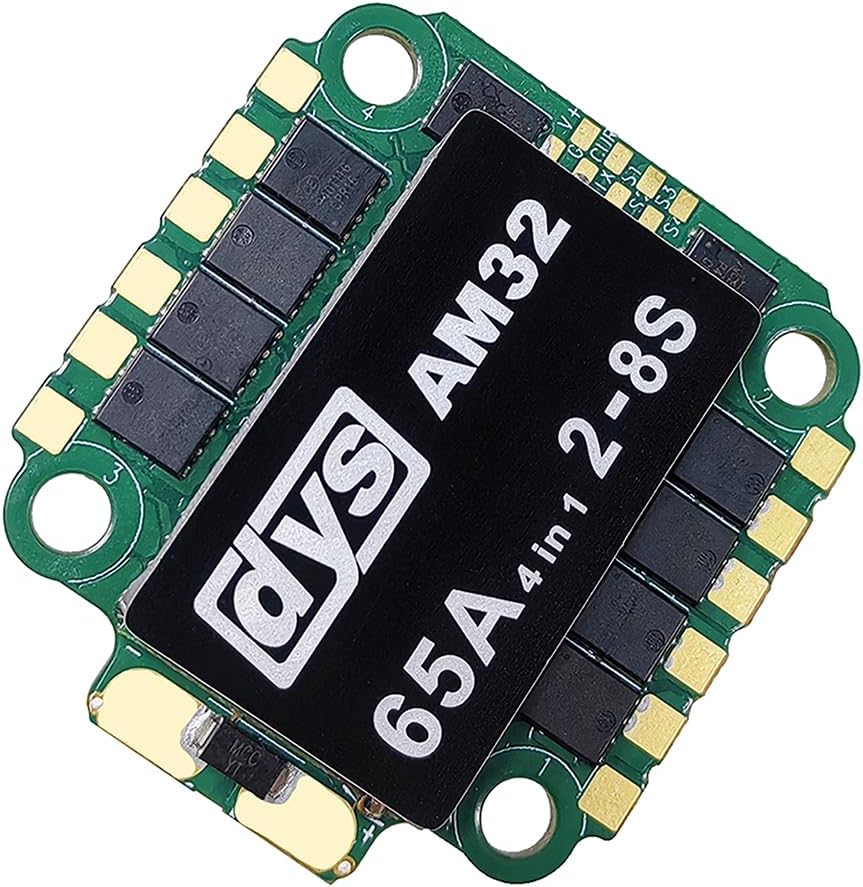
This ESC features modern AM32 firmware for precise control in freestyle and racing drones. The upgraded MOS components provide a 15% performance improvement for better efficiency and power handling.
We may earn a commission when you buy through this link, at no additional cost to you.
Support for 2 to 8S input makes it adaptable to various battery configurations. The 30x30mm mounting footprint ensures it fits standard racing frames without requiring custom adapters.
While reviews suggest some inconsistency, the technical specs are promising. The robust performance aims to deliver strong power output for a wide range of FPV applications including complex setups.
Pilots looking for next gen firmware features might consider this model. However verify compatibility with your flight controller before purchasing to avoid potential software issues.
AM32 firmware brings enhanced control capabilities and future proofing for new flight software developments.
New premium MOS components offer significant efficiency gains, improving throttle response and reducing electrical losses.
We may earn a commission when you buy through this link, at no additional cost to you.
This Stack combines a flight controller and ESC into one unit for simplified wiring. It supports 2 to 8S batteries and provides independent power for modern video transmitters like DJI O3.
We may earn a commission when you buy through this link, at no additional cost to you.
Features like 16MB black box and MPU6000 gyro ensure detailed flight data recording. The angled solder pads reduce welding difficulty, making the build process smoother for intricate stack installations.
Dual BEC outputs allow independent power distribution to VTX and OSD systems. This integration reduces weight and cable clutter, ideal for pilots valuing clean builds and advanced telemetry.
Choose this option if you want a streamlined build process. It centralizes electronics to reduce wiring errors, though it requires careful handling to avoid damaging both systems at once.
Integrating the FC and ESC reduces wire clutter and installation time, simplifying the drone assembly workflow.
Dedicated power lines ensure your high performance video systems receive stable energy without interfering with flight control.
We may earn a commission when you buy through this link, at no additional cost to you.
This ESC delivers balanced performance for mid-level racing drones. With a 4.4 rating, it supports Bluejay firmware and hardware generated motor PWM for improved throttle response and reduced noise.
We may earn a commission when you buy through this link, at no additional cost to you.
The EFM8BB21 MCU runs at 50 MHz, ensuring rapid processing of throttle commands. Dedicated 3-in-1 driver IC provides smoother starting, which helps prevent stalls during takeoff or landing.
Weighing just 15.8 grams, it is light enough for speed focused builds. However, the 3 to 6S limit may exclude users planning to run 8S systems for extended range or power.
For those needing reliable mid-power performance, this is a strong option. It offers the right balance of speed and efficiency without the bulk or cost of higher capacity units.
The 50 MHz MCU ensures fast command processing, resulting in instant throttle response during aggressive racing maneuvers.
A dedicated driver IC ensures motors spin up smoothly, reducing the risk of stalls during low speed operations.
We may earn a commission when you buy through this link, at no additional cost to you.
This ESC is optimized for efficiency with AT32F421 processor support. It delivers strong current handling with reduced power loss which extends flight time for racing and freestyle drones.
We may earn a commission when you buy through this link, at no additional cost to you.
Multi-layer PCB design increases over-current capability and helps dissipate heat effectively. Angled solder pads simplify the welding process, reducing physical strain during installation.
While it supports 2 to 6S batteries, the PWM frequency range allows fine tuning for specific motors. Real thermal management ensures stable performance during aggressive racing sessions.
Buildrs looking for cost efficient power should evaluate this model. It provides essential high performance features for FPV enthusiasts without the complexity of higher end telemetry systems.
High efficiency conversion reduces energy loss, allowing for longer flight times without increasing battery weight.
Multi-layer PCB design improves heat dissipation, protecting components from thermal stress during high performance use.
We may earn a commission when you buy through this link, at no additional cost to you.
Selecting the right ESC involves evaluating current handling, voltage range, and firmware options. Below are key factors to consider for optimized racing performance.
Continuous current defines the steady load an ESC can handle. Peak current is the burst capacity for short high throttle usage. Racing drones typically require 20A to 65A continuous for standard setups.
Choose an ESC with sufficient current margin above your motor requirements to prevent overheating.
Voltage range determines compatibility with 2S to 8S LiPo batteries. Most racing quadcopters use 2S to 6S configurations. Ensure the ESC supports your specific battery voltage to avoid damage.
Always match the ESC rating to your battery cell count for safety and performance.
Firmware like BLHeli_S and AM32 provides advanced features such as DShot protocols. These allow precise digital control over motor speed. Updating firmware can improve responsiveness over time.
Opt for ESCs with updateable firmware to keep your drone compatible with new flight controllers.
Protocols such as DShot600 or Oneshot determine how the flight controller talks to the ESC. Higher digital protocols reduce noise and increase update rates. PWM is older but still widely supported.
Prioritize DShot support for modern builds requiring low latency and accurate control.
Size and mounting holes must fit your frame design. Small racing frames need compact ESCs to reduce weight and maintain balance. Standard sizes like 30x30mm simplify replacements.
Measure your mounting area carefully to ensure the ESC fits without modification.
Materials like immersion gold PCBs and thick MOSFETs improve durability. High temperature resistance is essential for high power racing. Check for reinforced pads and quality soldering points.
Invest in robust builds to prevent failures during high stress flight maneuvers.
Telemetry provides real-time data like motor temperature and current usage. Advanced ESCs offer built-in ammeter telemetry via serial protocols. This helps diagnose issues and prevent burnouts.
Use telemetry for detailed monitoring if you fly frequently in challenging conditions.
Angle pads and standard connectors simplify soldering and wiring. Some ESCs come with pre-wired connectors or heat shrink. Easier installs reduce build time and risk of electrical errors.
Look for user friendly designs if you are assembling your first racing drone.
After installation, test the ESC with a low voltage battery first to confirm throttle response. Ensure the DShot protocol matches your flight controller settings to avoid signal errors.
Keep the ESC clean and free of dust after every flight. Use compressed air to blow out debris from heat sinks to maintain optimal cooling during high performance use.
Monitor ESC temperatures during heavy use. If you notice excessive heat, check connections or reduce throttle load to prevent long term damage to internal components.
BLHeli_S is widely supported and easy to update via standard tools. AM32 is a newer firmware offering advanced features like motor calibration. Both support DShot protocols but AM32 provides deeper tuning options.
Yes, a 6S ESC can safely operate with a 4S battery as it falls within the supported voltage range. Ensure your power distribution and connectors match the battery capacity.
Not necessarily. Individual ESCs allow easier replacement if one fails. However 4in1 ESCs save weight and reduce wiring complexity which is preferred for most racing builds.
DShot is a digital communication protocol between flight controllers and ESCs. It replaces older analog PWM signals to provide faster and more accurate throttle control for racing drones.
Overheating often occurs due to insufficient current ratings or poor heat dissipation. Ensure your ESC handles your motor load and consider adding cooling airflow during aggressive maneuvers.
Use tools like BLHeli Suite or AM32 GUI via the UART connection. Connect your flight controller to a computer and follow the on screen instructions to upload the latest firmware version.
It is not recommended as different ESCs may behave differently under load. Using identical ESCs ensures balanced performance and prevents crashes caused by inconsistent motor speeds.
Continuous current is the maximum load the ESC can handle indefinitely without overheating. Peak current is the short burst capability. Always choose an ESC exceeding your motor draw for safety.
We reviewed ten top ESCs offering a mix of performance, size, and value. The 4Pcs 20A set stands out for overall value while the SEQURE E160 offers premium power for high voltage setups.
Prioritize current ratings and firmware support based on your specific build needs. Matching your ESC to your flight controller and battery ensures stable power delivery during racing flights.
Prices and stock vary rapidly on Amazon so check the current listings before finalizing your order. Always verify voltage ratings to avoid damaging your drone components.